
Rubber vs Polyethylene Foam for AC Refrigerant Lines
Rubber foam and polyethylene foam can both appear in AC and refrigeration pipe insulation searches, but the material name alone does not determine whether a product fits the application. This guide explains what contractors, HVAC engineers, and project buyers should compare when selecting insulation for refrigerant lines, from condensation control and thickness to joints, outdoor exposure, and project specifications.
- Why Are Rubber and Polyethylene Foam Both Used for Pipe Insulation?
- What Does AC Refrigerant Line Insulation Actually Need to Do?
- Rubber vs Polyethylene Foam: What Should Buyers Actually Compare?
- Where Does NBR/PVC Rubber Foam Fit AC Refrigerant Lines?
- Can Polyethylene Foam Be Used on Refrigerant Lines?
- Why Pipe Size and Insulation Thickness Still Need Separate Checks
- Pipe OD and Insulation ID Must Also Match
- What Changes for Outdoor Refrigerant Lines?
- Why Can a Refrigerant Line Still Sweat After It Is Insulated?
- If a Project Says “PE Foam,” Is Polyethylene Always Mandatory?
- What Should Be Verified Before Selecting Either Material?
- FAQ
When an AC or refrigeration line needs insulation, buyers may encounter NBR/PVC rubber foam, polyethylene foam, XLPE, IXPE, and more general descriptions such as closed-cell pipe insulation. Several of these products can look similar from a catalogue photo, but they are not the same material and should not be selected from appearance alone.
For refrigerant piping, the more useful question is not simply whether rubber or polyethylene is better. The insulation has to match the pipe temperature, surrounding humidity, required thickness, joint design, installation environment, and any material requirements written into the project specification.
Buyers who first need to confirm the material itself can refer to the guide on how to distinguish IXPE from NBR/PVC rubber foam. This article focuses specifically on how those material differences affect AC and refrigerant-line selection.
Why Are Rubber and Polyethylene Foam Both Used for Pipe Insulation?
NBR/PVC rubber foam belongs to the flexible elastomeric foam family. Polyethylene foam belongs to the polyolefin family, and buyers may encounter several versions, including non-cross-linked polyethylene and cross-linked products described as XLPE, XPE, or IXPE.
Both material families can be manufactured with a closed-cell structure and supplied in pipe-insulation formats. That is why the terms can become blurred during sourcing, particularly when a quotation only says “closed-cell foam” or “foam pipe insulation.”
Closed-cell describes the structure of the foam. It does not identify the polymer, the service temperature, the fire performance, or whether the product is designed for a particular refrigeration system.
For HVAC projects, the application should therefore be checked separately from the material name. The FUNAS HVAC duct and pipe insulation solutions page, for example, separates refrigerant and chilled-water piping from duct and equipment applications because the operating conditions and insulation requirements are different.
What Does AC Refrigerant Line Insulation Actually Need to Do?
Refrigerant lines can operate below the surrounding air temperature, creating a continuous risk of heat gain and surface condensation. The severity of that risk changes with the refrigerant-line temperature, ambient temperature, relative humidity, pipe diameter, insulation thickness, and installation conditions.
For below-ambient refrigerant piping, the insulation system therefore needs to address more than heat transfer. Moisture movement and the continuity of the installed insulation system also matter.
- Limit unwanted heat gain into the refrigerant line.
- Keep the exterior insulation surface above the local dew point where condensation control is required.
- Limit moisture and water-vapor entry into the insulation system.
- Maintain insulation continuity across longitudinal joints, butt joints, elbows, fittings, and other transitions.
- Remain suitable for the actual indoor or outdoor service environment.
The ASHRAE guidance on insulation systems for refrigerant piping treats material selection, insulation thickness, vapor-control continuity, installation, and maintenance as parts of the same insulation system rather than independent decisions.
This is why choosing insulation by material name alone can be misleading. A suitable foam installed at the wrong thickness or with open joints can still result in condensation problems.
Rubber vs Polyethylene Foam: What Should Buyers Actually Compare?
A useful comparison starts with the specific products being offered rather than broad claims about entire material families.
| Selection Point | NBR/PVC Rubber Foam | Polyethylene Foam |
|---|---|---|
| Material family | Flexible elastomeric foam based on NBR/PVC | Polyolefin foam based on polyethylene; product may be cross-linked or non-cross-linked |
| Closed-cell construction | Available as closed-cell insulation | Available as closed-cell insulation |
| Pipe insulation form | Commonly supplied as flexible preformed tubes as well as sheet and roll products | Pipe sections and other foam formats are available depending on the product |
| Flexibility | Typically selected where flexible fitting around piping and fittings is useful | Flexibility and stiffness vary with foam type, density, and manufacturing process |
| Thermal performance | Compare tested thermal conductivity at the stated mean temperature and test method | Compare tested thermal conductivity under equivalent conditions |
| Moisture performance | Check water-vapor and water-absorption data for the specific product | Check water-vapor and water-absorption data for the specific product |
| Fire requirements | Use the applicable test report for the exact product or grade | Use the applicable test report for the exact product or grade |
| Outdoor installation | Check whether a facing, coating, jacket, or other protection is required | Check the manufacturer's outdoor-use and protection requirements |
| Material substitution | Do not use as an automatic replacement where PE or XLPE is specifically required | Do not assume that any PE foam meets an HVAC specification simply because it is closed-cell |
This approach avoids one of the most common sourcing mistakes: comparing one tested NBR/PVC product with a generic description of polyethylene foam, or the reverse.
Where Does NBR/PVC Rubber Foam Fit AC Refrigerant Lines?
NBR/PVC elastomeric insulation is widely used on below-ambient mechanical piping because its flexible pipe form can follow straight runs and be cut and fitted around changes in direction, fittings, and connections.
Preformed pipe insulation is particularly useful where the insulation inner diameter can be matched to the outside diameter of the refrigerant pipe. Separate sheet or roll material can then be used where the geometry cannot be covered effectively with a standard tube.
FUNAS supplies NBR/PVC rubber foam pipe insulation for HVAC systems in flexible closed-cell pipe form for HVAC, refrigeration, chilled-water, and related mechanical piping applications. The suitability of a particular configuration still depends on the project's operating conditions and insulation design.
For contractors, the practical benefit is less about the word “rubber” itself and more about having a flexible insulation format that can maintain continuous coverage across the refrigerant piping system.
Can Polyethylene Foam Be Used on Refrigerant Lines?
Yes. Polyethylene foam should not be dismissed as unsuitable for refrigeration or air-conditioning simply because elastomeric rubber foam is also commonly used.
The European Association of FEF and PEF Insulation Manufacturers discusses both flexible elastomeric foam and polyethylene foam in cold, refrigeration, and air-conditioning applications in its guidance on condensation control with flexible closed-cell insulation.
The important qualification is that “polyethylene foam” describes a broad material category. A packaging foam sheet, a general-purpose PE pipe sleeve, and an engineered closed-cell polyethylene insulation product should not automatically be treated as technically equivalent.
For a refrigerant-line project, check the actual product documentation for the required thermal, moisture, temperature, dimensional, and fire-performance information. The same rule applies when evaluating NBR/PVC products.
Why Pipe Size and Insulation Thickness Still Need Separate Checks
Choosing the material does not determine the insulation thickness.
A refrigerant line operating in a dry mechanical room and the same line installed in a hot, humid plant area may require different condensation-control calculations. Ambient temperature, relative humidity, service temperature, pipe size, surface emissivity, and the thermal properties of the insulation can all affect the required thickness.
For this reason, copying a commonly used thickness from another project is not a reliable specification method. The guide to choosing insulation thickness for hot and humid conditions explains how dew point and project conditions affect cold-pipe insulation selection.
Pipe OD and Insulation ID Must Also Match
Pipe size descriptions can create another source of error. The insulation inner diameter should correspond to the actual outside diameter of the pipe being insulated rather than being selected from a vague nominal size description.
If a tube is forced over a pipe that is too large, the insulation may be stretched or compressed. If the insulation is excessively loose, gaps can remain between the pipe and insulation. Neither condition should be treated as a normal installation detail.
This matters regardless of whether the base material is NBR/PVC or polyethylene.
What Changes for Outdoor Refrigerant Lines?
Outdoor insulation has an additional job: the finished system has to withstand its exposure environment.
Sunlight, rain, wind, maintenance activity, and physical impact can all affect the outer surface of an insulation system. Buyers should therefore avoid assuming that selecting rubber foam or polyethylene foam automatically solves outdoor durability.
Depending on the product and project, an outdoor refrigerant line may require a compatible coating, protective facing, jacket, or other weather-protection system. Seams, terminations, penetrations, and exposed fittings also need to remain protected rather than leaving openings where moisture can enter.
Where a faced elastomeric product is being considered, the facing should be treated as an additional exterior layer. It does not replace correct insulation thickness, joint sealing, or the performance of the insulation beneath it.
Why Can a Refrigerant Line Still Sweat After It Is Insulated?
Visible condensation after installation does not automatically mean that the wrong foam family was selected.
Several design and installation problems can produce the same symptom:
- Insulation thickness is insufficient for the operating and ambient conditions.
- Longitudinal or butt joints have not been sealed continuously.
- Elbows, tees, valves, or other fittings contain gaps.
- The insulation has been stretched or compressed during installation.
- Pipe supports interrupt the insulation or vapor-control continuity.
- Outdoor protection has been damaged, allowing moisture to enter the system.
The detailed guide to rubber foam insulation installation mistakes that cause condensation covers these failure points in more detail.
The practical lesson is that material selection and installation quality should be evaluated separately. Changing from PE to rubber, or from rubber to PE, will not correct a poorly sealed insulation system by itself.
If a Project Says “PE Foam,” Is Polyethylene Always Mandatory?
Not necessarily, but the wording has to be checked carefully.
If the project specification, consultant submittal, or approved material schedule explicitly requires polyethylene, XLPE, IXPE, or another defined polymer, that is a material requirement. An NBR/PVC product should not be presented as the same material or substituted without the required project approval.
In other cases, a buyer may use “PE foam” or simply “foam insulation” as a general description for the black closed-cell pipe insulation they have used before. In that situation, the name used in the inquiry may not tell the full technical story.
The next step is to identify what the system actually requires: a particular polymer, or an insulation product that meets defined thermal, condensation-control, dimensional, fire, and installation requirements.
This distinction is especially useful for international sourcing, where local trade names and informal product descriptions do not always match the terminology used on technical data sheets.
What Should Be Verified Before Selecting Either Material?
A short technical check is more useful than choosing from a single comparison chart.
- Confirm the material requirement. Determine whether NBR/PVC, PE, XLPE, IXPE, or another material is explicitly specified.
- Identify the actual pipe size. Use the pipe outside diameter when matching preformed insulation.
- Determine the required thickness. Base the selection on service and ambient conditions rather than habit.
- Review thermal and moisture data. Compare values together with their test method and test conditions.
- Check joints and fittings. A cold-line insulation system needs continuity across more than the straight pipe sections.
- Review the installation environment. Indoor, outdoor, exposed, concealed, and high-humidity locations may require different details.
- Check project-specific documentation. Fire, thermal, environmental, or other test requirements should match the product being evaluated.
Once these conditions are clear, the choice between NBR/PVC elastomeric foam and polyethylene foam becomes a project decision rather than a debate over which material family is universally better.
FAQ
Is rubber insulation better than polyethylene foam for refrigerant lines?
Not in every application. NBR/PVC elastomeric foam is commonly evaluated for refrigerant piping because of its flexible closed-cell construction and pipe-insulation formats, while suitable polyethylene foam products are also used in refrigeration and air-conditioning applications. The correct choice depends on the specific product data and project requirements.
Can polyethylene foam be used on AC copper lines?
Yes, provided the specific polyethylene insulation product is intended for the operating conditions and meets the project's thermal, moisture, thickness, fire, and installation requirements. A generic PE foam product should not be assumed suitable solely because it is closed-cell.
Is closed-cell foam the same as rubber insulation?
No. Closed-cell describes the foam structure. NBR/PVC rubber foam, polyethylene foam, and other materials can all be manufactured with closed-cell structures while remaining different polymer families.
Does outdoor refrigerant-line insulation need protection?
Outdoor installations should be reviewed for sunlight, weather, water entry, and physical exposure. A suitable coating, facing, jacket, or other protective system may be required depending on the insulation product and project specification.
Can NBR/PVC rubber foam replace XLPE if a specification requires XLPE?
Not automatically. If XLPE is explicitly specified, switching to NBR/PVC is a material substitution and should follow the project's approval process. If the requirement is performance-based rather than polymer-specific, both materials can be evaluated against the stated technical criteria.
Explore NBR/PVC Insulation for HVAC Piping
For AC and refrigeration projects where flexible elastomeric insulation is permitted, the FUNAS NBR/PVC rubber foam insulation range provides a starting point for reviewing pipe and sheet configurations against the required application and operating conditions.
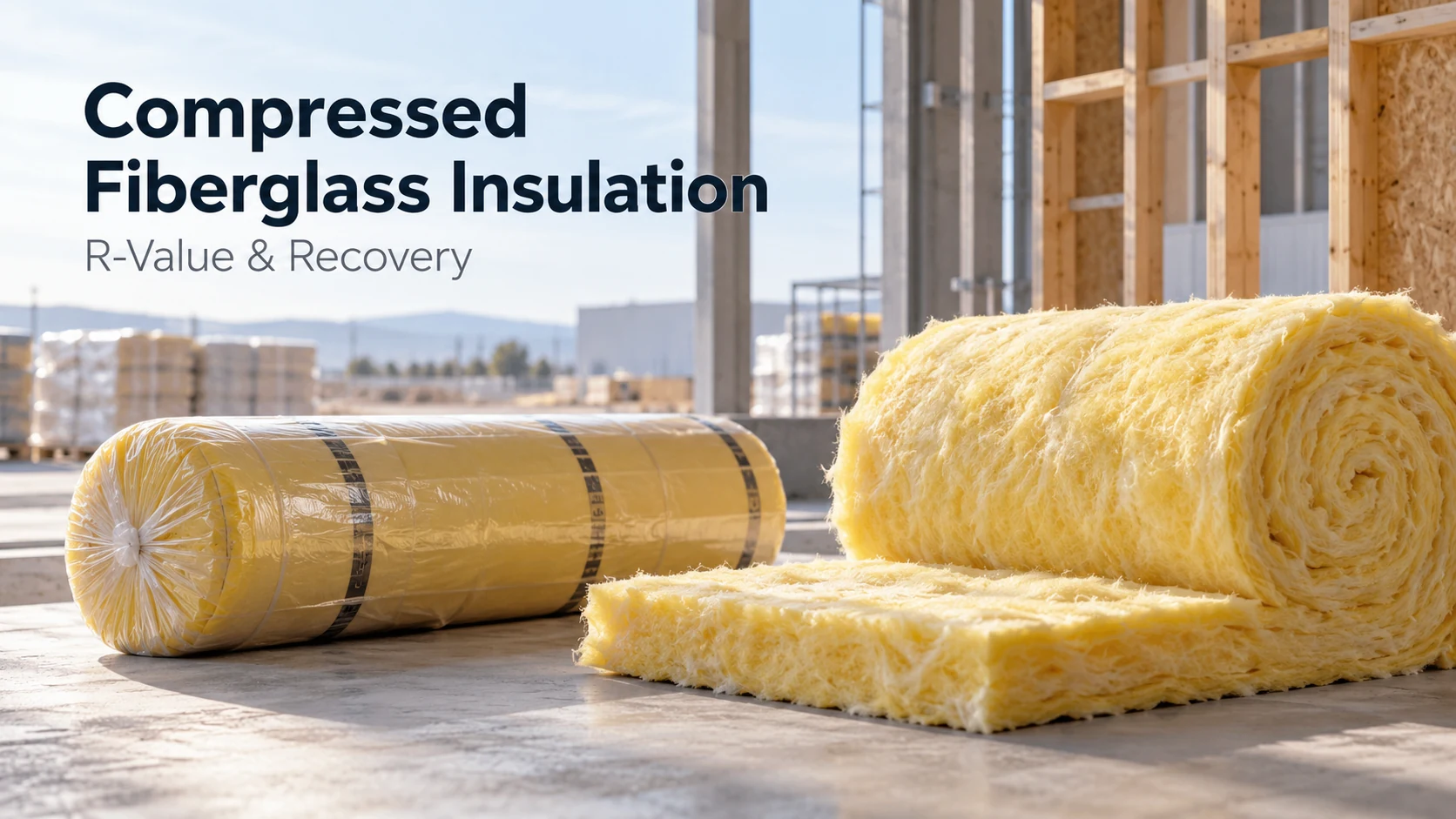
What Happens When Fiberglass (Glass Wool) Insulation Is Compressed?
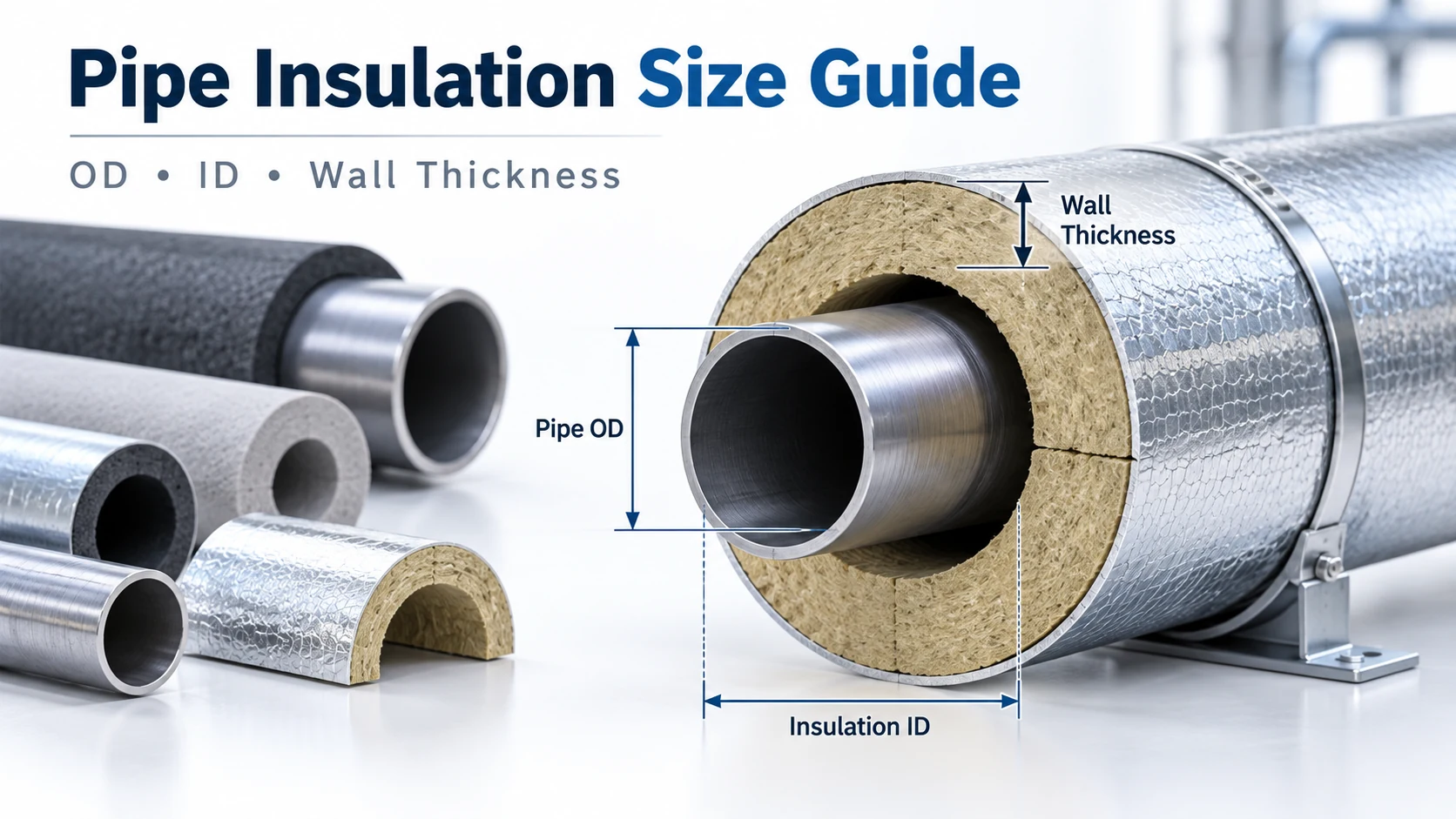
Pipe Insulation Size Guide: How to Match Pipe OD, Insulation ID and Wall Thickness
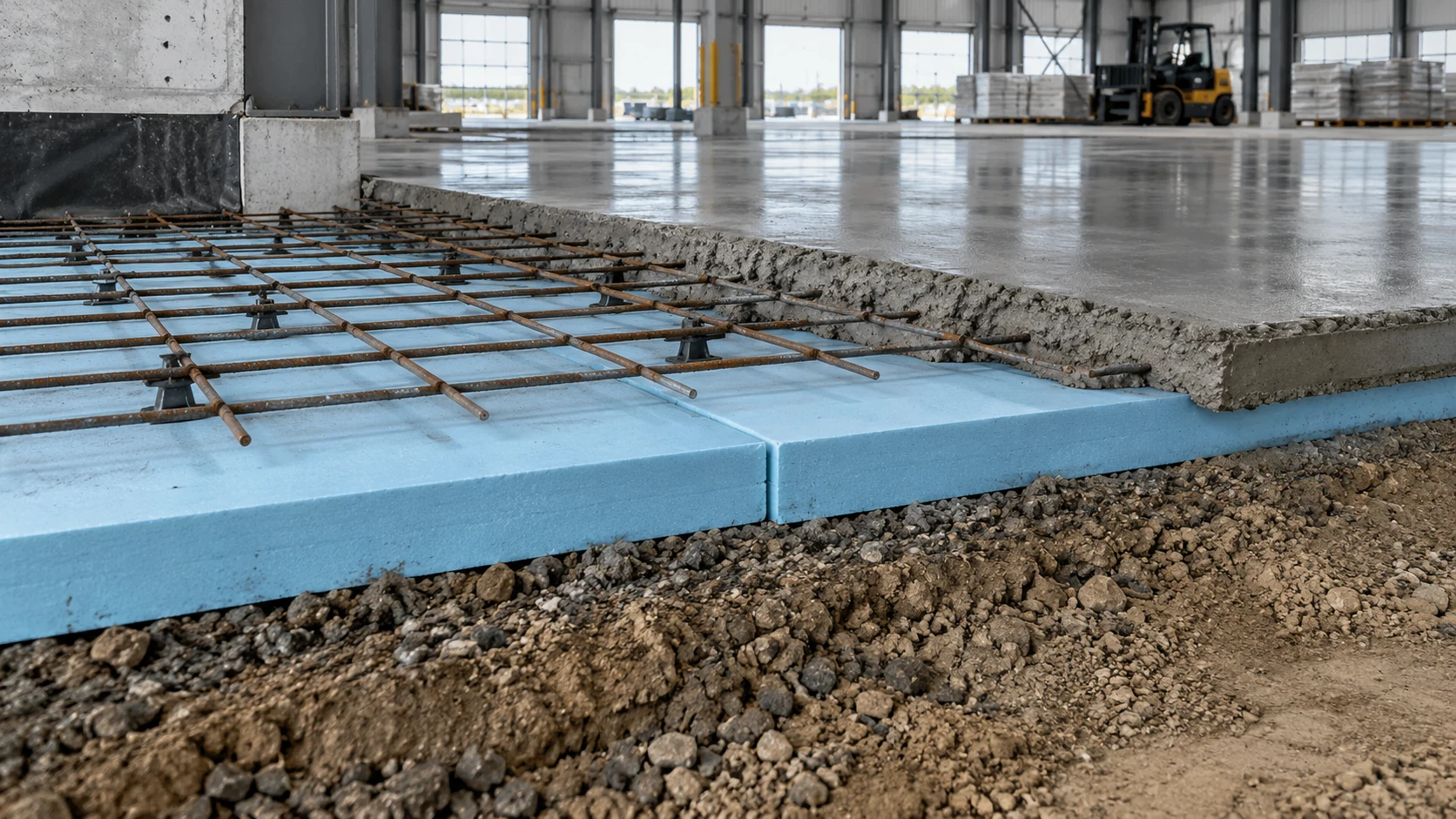
What XPS Compressive Strength Do I Need Under a Concrete Slab?
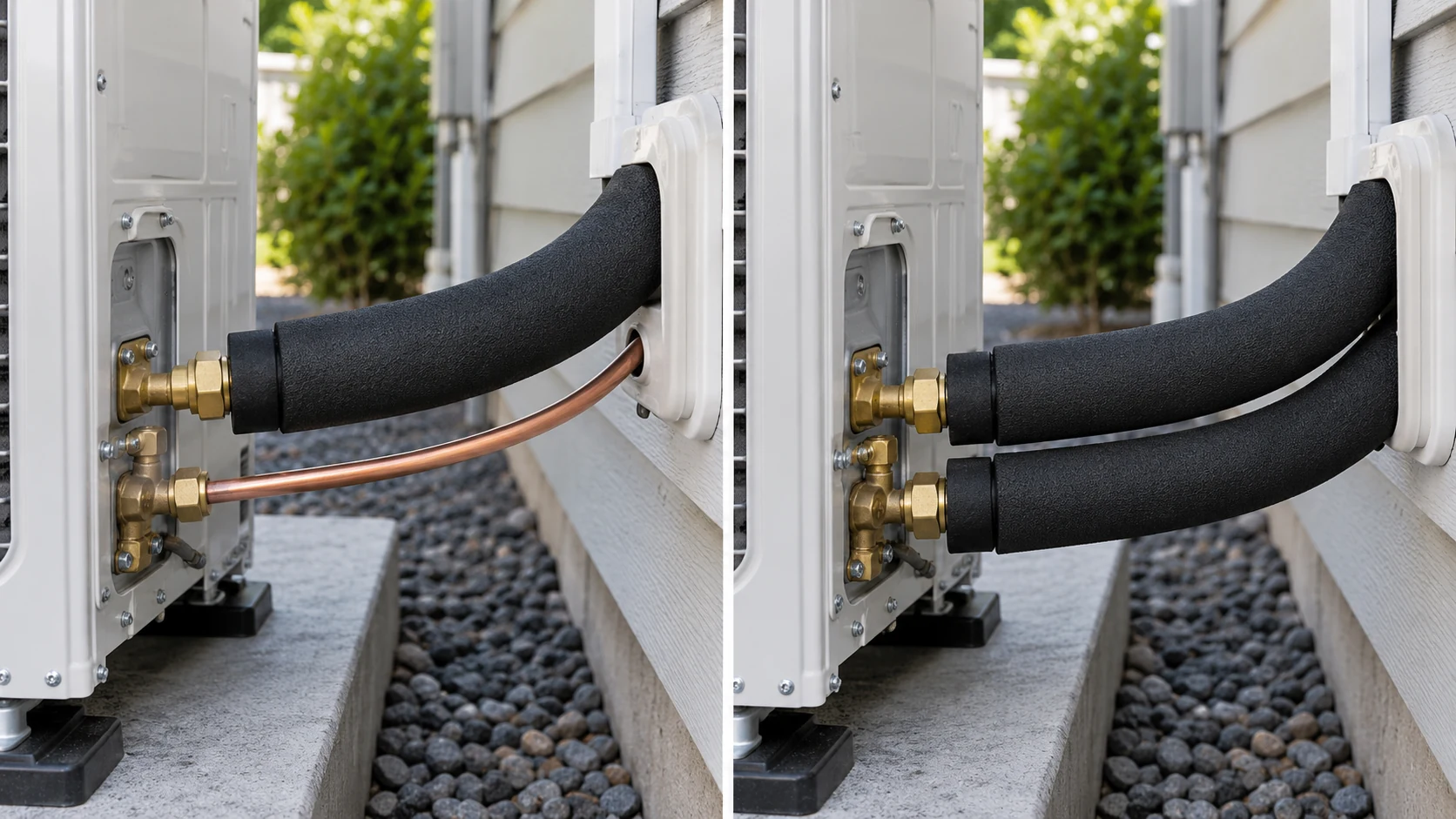
Do Both Refrigerant Lines Need Insulation?
What is your usual production and delivery time?
Delivery time depends on the product type, order quantity, customization requirements, and shipping destination. Standard products are usually faster to arrange, while customized or large-volume orders may require longer production time.
Can you arrange international shipping?
Yes. We can help arrange international shipping by sea, air, or express depending on the order volume and delivery needs. We can also work with your appointed freight forwarder if required.
What certificates or test reports can you provide?
We can provide available certificates, test reports, and product documents according to the product type and project requirements. If your project requires a specific standard, please confirm with us before ordering.
What insulation products do you supply?
We supply rubber foam insulation, glass wool insulation, rock wool insulation, XPS insulation boards, acoustic foam products, and thermal insulation adhesive. These products are commonly used in HVAC systems, construction projects, industrial equipment, and acoustic applications.
Leave a message
Have any questions or concerns about our products? Please leave us a message here and our team will get back to you promptly.
Your queries, ideas, and collaboration opportunities are just a click away. Let’s start a conversation.



















































FUNAS Insulation Material
funasinsulation
funasinsulation
Guangdong FUNAS Insulation Material Co.Ltd