
What XPS Compressive Strength Do I Need Under a Concrete Slab?
XPS under a concrete slab cannot be selected from thickness alone. Compressive strength has to be checked against the actual load, slab design, concentrated loads and long-term deformation, especially in garages, warehouses, cold stores and industrial floors.
- What XPS Compressive Strength Do I Need Under a Concrete Slab?
- Quick Guide: Typical XPS Strength by Slab Application
- What Does XPS Compressive Strength Actually Mean?
- kPa and psi are different ways of expressing pressure
- The number comes from a defined compression test
- Short-term strength is not the same as long-term design load
- Why Does Compressive Strength Matter Under a Concrete Slab?
- What Determines the XPS Strength You Need?
- 1. Start with the actual floor load
- 2. Separate distributed loads from point loads
- 3. Vehicle weight alone is not enough
- 4. Slab thickness and reinforcement change load distribution
- 5. Permanent loads bring creep into the discussion
- 25 psi vs 40 psi vs 60 psi vs 100 psi XPS: What Do These Grades Mean?
- Three Common Mistakes When Choosing Under-Slab XPS
- Mistake 1: Assuming thicker XPS is stronger XPS
- Mistake 2: Selecting by density alone
- Mistake 3: Treating 300 kPa as permanent floor capacity
- How to Choose XPS for Different Concrete Floor Applications
- Residential and lightly loaded floors
- Garages and vehicle floors
- Warehouses and storage floors
- Cold-storage floors
- Industrial floors with heavy equipment
- What Should Buyers Confirm Before Ordering Under-Slab XPS?
- FUNAS XPS for Under-Slab Applications
- FAQ
What XPS Compressive Strength Do I Need Under a Concrete Slab?
There is no single XPS compressive-strength grade that fits every concrete floor. A lightly loaded commercial floor, a vehicle garage and a warehouse with pallet racks may all use XPS below the slab, but the loads reaching the insulation are very different.
The practical way to choose XPS compressive strength under a concrete slab is to look at three things together: the load condition, the slab design and long-term performance.
One point matters from the start: the compressive-strength number shown on an XPS data sheet is a tested material property. It should not automatically be treated as the allowable long-term load of the finished floor.
If you are still comparing board thickness, dimensions and general construction applications, the XPS insulation board selection guide covers those broader specification questions. This guide focuses specifically on load-bearing floor applications.
Quick Guide: Typical XPS Strength by Slab Application
| Application | Selection Direction | Main Question to Check |
|---|---|---|
| Lightly loaded floor | Lower-strength grades may be sufficient | What does the project specification require? |
| Garage or vehicle floor | Medium to higher strength may be required | What loads are carried through the wheels? |
| Warehouse or storage floor | Higher-strength or engineered selection | Are there racks, forklifts or concentrated loads? |
| Cold-storage floor | Project-specific selection | What are the structural and thermal requirements? |
| Industrial floor | Engineered selection | How are machinery and equipment loads supported? |
This table is a general selection reference rather than a design table. A building name alone does not tell you which XPS grade to order.
- • Lightly loaded floors: start with the project specification and expected distributed load.
- • Vehicle floors: check wheel loads rather than relying only on total vehicle weight.
- • Warehouses: pay attention to racking, forklifts and other concentrated loads.
- • Industrial floors: machinery supports and slab design often require project-specific review.
What Does XPS Compressive Strength Actually Mean?
kPa and psi are different ways of expressing pressure
XPS compressive strength may be listed in kilopascals (kPa) or pounds per square inch (psi), depending on the market. For quick comparison, 1 psi is approximately 6.9 kPa.
The conversion is straightforward. What deserves more attention is the test behind the number.
The number comes from a defined compression test
Suppose one supplier lists 300 kPa and another lists 400 kPa. Comparing those two figures without checking the test conditions can give the wrong impression.
Before treating two compressive-strength values as directly comparable, check:
- • The test method used
- • The deformation or yield condition
- • The product grade and specimen tested
- • Whether the figure is a minimum, declared or individual test result
- • Whether the project specification uses the same test basis
If a result is reported at 10% deformation, for example, that condition is part of the test result. It does not mean that 10% insulation deformation would be acceptable in an operating floor.
ASTM C165-23 is a test method for measuring compressive properties of thermal insulation. Its load-deformation data still has to be reviewed for the intended engineering use rather than treated as a standalone floor-load rating.
Short-term strength is not the same as long-term design load
A laboratory result of 300 kPa does not automatically mean that the finished floor should carry a permanent 300 kPa service load. An insulation layer below a slab may remain under pressure for years, so the design may also need to consider:
- • Sustained loading
- • Creep over time
- • Allowable deformation
- • Repeated or moving loads
- • Design safety factors
- • Load distribution through the concrete slab
For a buyer or contractor, the useful question is whether the compressive-strength requirement came from the floor design or was simply copied from a supplier's data sheet.
Why Does Compressive Strength Matter Under a Concrete Slab?
The XPS layer forms part of the load path beneath the floor:
People, storage, vehicles or equipment → concrete slab → XPS insulation → base or subgrade
The concrete slab helps spread loads before they reach the insulation. A wheel, rack leg or machine foot may apply a concentrated load at the top surface, while the slab distributes that load over a wider area below.
If the insulation deforms excessively over time, the support condition beneath the concrete can change. Possible concerns include:
- • Changes in floor level
- • Movement around joints
- • Changes in support beneath floor finishes
- • Reduced long-term stability of the floor system
This does not mean that a particular XPS strength automatically prevents or causes concrete cracking. Slab thickness, reinforcement, subgrade preparation and the rest of the floor system also matter.
What Determines the XPS Strength You Need?
1. Start with the actual floor load
Do not start with labels such as residential, commercial or industrial. Start with what the floor will actually carry.
- • People and normal occupancy
- • Stored materials
- • Pallet racks
- • Cars and trucks
- • Forklifts and pallet trucks
- • Production machinery
- • Tanks and fixed equipment
Two warehouses can therefore have very different insulation requirements. One may store light goods across a large area, while another may use high-bay racking that transfers substantial loads through relatively small rack feet.
2. Separate distributed loads from point loads
Total weight alone can hide the actual loading condition. The way that weight reaches the floor matters.
- • Distributed load: the load is spread over a relatively large area, such as ordinary floor loading or uniformly stored goods.
- • Point or concentrated load: the load enters the floor through a much smaller contact area, such as a rack leg, machine foot or vehicle wheel.
Imagine the same total weight sitting on a wide base and then on four small steel feet. The weight has not changed, but the pressure introduced into the floor system can be very different.
This is why dividing the total warehouse load by the total floor area may miss the local load conditions that actually influence the design.
3. Vehicle weight alone is not enough
For garages, loading bays and warehouses, gross vehicle weight is useful information, but it is only the starting point.
Where vehicles are involved, the project may also need to check:
- • Individual wheel loads
- • Wheel spacing
- • Wheel contact area
- • Loaded and unloaded vehicle conditions
- • Traffic frequency
- • Repeated travel routes
- • Turning and braking areas
Forklifts are a good example. A loaded forklift can transfer substantial forces through relatively small wheels while repeatedly travelling along the same aisle. That is a different load condition from an occasional passenger car in a private garage.
For significant forklift, truck or heavy-vehicle traffic, the required insulation performance should come from the floor design rather than a generic “garage XPS” recommendation.
4. Slab thickness and reinforcement change load distribution
The concrete slab spreads concentrated loads before they reach the insulation. Its thickness, reinforcement and structural layout therefore affect how the XPS below is loaded.
This is why a message such as “The machine weighs five tons. Which XPS should I use?” does not provide enough information.
More useful project details include:
- • The number of equipment supports
- • The size of each foot or baseplate
- • The spacing between supports
- • The concrete slab thickness
- • The reinforcement or structural floor design
A large machine resting on a broad continuous base does not load the floor in the same way as equipment transferring the same total weight through several small feet.
For projects involving floors together with roofs, walls or other construction areas, the building and construction insulation solutions page gives a broader view of insulation selection across different building assemblies.
5. Permanent loads bring creep into the discussion
XPS does not behave exactly the same way during a short compression test and after years under sustained pressure. Gradual time-dependent deformation under continuous loading is generally discussed as creep.
Long-term loading deserves closer attention in applications such as:
- • Permanent pallet racking
- • Cold-storage inventory
- • Fixed production equipment
- • Storage tanks
- • Heavy long-term storage
If a data sheet only provides a short-term compressive-strength value, that figure should not be turned directly into the allowable permanent floor load.
Where sustained loading controls the design, the engineer may need creep data, an allowable design stress or another project-specific long-term performance criterion.
25 psi vs 40 psi vs 60 psi vs 100 psi XPS: What Do These Grades Mean?
In markets that specify XPS in psi, buyers commonly encounter grades such as 25, 40, 60 and 100 psi. These figures help distinguish material strength classes, but they are not ready-made floor load limits.
| Nominal Grade | Approx. Metric Equivalent | What the Number Indicates |
|---|---|---|
| 25 psi | About 172 kPa | A lower nominal compressive-strength class |
| 40 psi | About 276 kPa | A higher nominal compressive-strength class |
| 60 psi | About 414 kPa | A higher-strength class for more demanding specifications |
| 100 psi | About 689 kPa | A very high compressive-strength class used where the design calls for it |
The XPS Association technical reference provides additional industry context on XPS product classifications and compressive-resistance levels.
When comparing these grades, keep two points separate:
- • A 60 psi board has a higher nominal compressive resistance than a 25 psi board.
- • That does not mean every warehouse needs 60 psi or every industrial floor needs 100 psi.
Higher compressive strength is not automatically the better specification. If the floor design does not require the higher grade, increasing the strength can add material cost without solving the part of the floor system that actually controls performance.
If you are comparing rigid insulation materials rather than XPS grades alone, see XPS vs EPS vs PIR insulation for construction projects.
Three Common Mistakes When Choosing Under-Slab XPS
Mistake 1: Assuming thicker XPS is stronger XPS
Thickness and compressive strength are separate specifications.
- • Thickness: mainly selected around thermal requirements and available construction depth.
- • Compressive strength: describes how the material responds to loading under a defined test condition.
A 100 mm board is therefore not automatically a higher compressive-strength grade than a 50 mm board. Different thicknesses can be supplied within the same mechanical grade.
If an RFQ only says “100 mm XPS,” the supplier still does not know the required compressive strength.
Mistake 2: Selecting by density alone
Density and compressive strength are different properties.
- • Density may relate to mechanical performance within a particular product range.
- • Foam formulation and cell structure also influence performance.
- • Two boards with similar density figures do not automatically have the same compressive strength.
If the project drawing specifies compressive strength, compare that property directly rather than trying to estimate it from kg/m³.
Mistake 3: Treating 300 kPa as permanent floor capacity
A 300 kPa material test result does not automatically mean that the finished floor can carry a permanent 300 kPa service pressure.
Before using the number for selection, confirm:
- • The test method
- • The deformation condition used to report the result
- • The expected long-term loading
- • Whether concentrated loads are present
- • How the slab distributes those loads
- • The allowable stress or deformation required by the project
The compressive-strength test value and the allowable long-term floor load are not the same thing by default.
How to Choose XPS for Different Concrete Floor Applications
Residential and lightly loaded floors
For lightly loaded floors, very high compressive-strength grades may not be necessary unless the project specification requires them.
The main checks are:
- • Required insulation thickness
- • Thermal performance
- • Floor build-up
- • Normal imposed loads
- • Compressive requirement stated by the designer
There is little value in paying for a higher mechanical grade if the project does not require it.
Garages and vehicle floors
Once vehicles are involved, move beyond the total floor load.
- • Confirm the expected vehicle type and loaded weight.
- • Check individual wheel loads where required.
- • Review traffic frequency and repeated vehicle routes.
- • Confirm the concrete slab construction.
A private garage with occasional passenger cars is a different load case from a commercial floor regularly used by delivery vehicles.
Warehouses and storage floors
For warehouse floors, the information hidden behind the word “storage” often determines the specification.
Useful project information includes:
- • Maximum stored load
- • Rack type and layout
- • Rack-leg load or baseplate dimensions
- • Forklift type
- • Loaded wheel conditions
- • Main traffic routes
- • Concrete slab specification
This gives the project team something useful to assess. A request that only says “warehouse, 50 mm XPS” does not.
Cold-storage floors
Cold-storage floors combine thermal and mechanical requirements in the same assembly. The insulation may sit below stored products, pallet racks and material-handling equipment for long periods while also meeting the required thermal design.
For procurement, keep the main requirements separate in the RFQ:
- • Required insulation thickness
- • Thermal performance requirement
- • Required compressive strength
- • Floor loading condition
- • Operating conditions
- • Moisture-control requirements where specified
This gives suppliers much clearer information than a request for “high-density cold-room XPS.”
Industrial floors with heavy equipment
Industrial machinery can introduce substantial concentrated loads through relatively small supports or baseplates.
Before selecting the XPS grade, confirm:
- • Total equipment weight
- • Number of supports
- • Support or baseplate dimensions
- • Whether the equipment is permanently installed
- • Any nearby forklift or vehicle traffic
- • Slab construction and structural requirements
For machinery, tanks and other highly concentrated loads, the floor design should establish the required insulation performance before the purchase order is issued.
What Should Buyers Confirm Before Ordering Under-Slab XPS?
An XPS quotation becomes much easier to compare when every supplier receives the same project information.
| Information | What to Provide |
|---|---|
| Application | Garage, warehouse, cold store, industrial floor or other slab application |
| Compressive strength | Required kPa or psi value where specified |
| Test basis | Required test method and deformation or yield condition |
| Thickness | Specified XPS insulation thickness |
| Board size | Required length and width |
| Floor loading | Distributed and permanent loads |
| Concentrated loads | Rack legs, wheel loads, machine feet or similar loads |
| Thermal requirement | Specified conductivity, resistance or thermal design requirement |
| Quantity | Total area, volume or board quantity |
| Documents | Required test reports, certificates or technical submittals |
| Packaging and destination | Any packing requirements and delivery destination |
If the structural drawing already states the required insulation compressive strength, use that value in the RFQ. If it does not, provide the actual load information to the project engineer rather than asking the insulation supplier to estimate a structural requirement from the building type.
For broader order preparation, the insulation material procurement checklist for contractors and distributors covers specifications, documentation, packaging and quotation information in more detail.
FUNAS XPS for Under-Slab Applications
The current FUNAS XPS extruded polystyrene insulation board range includes approximately 300–400 kPa compressive-strength options for project selection.
A third-party test on a FUNAS XPS sample reported an average compressive strength of approximately 390 kPa at 10% deformation under ASTM C165-23 Procedure A. The result documents the performance of the tested sample under the stated test condition; it should not be read as a 390 kPa allowable long-term floor design stress.
Current product information includes:
- • Thickness options from 30–100 mm
- • Standard board size of 600 × 1800 mm
- • Approximately 300–400 kPa compressive-strength options
- • Project-specific dimensions, density and specifications subject to confirmation
For an under-slab project, a useful inquiry therefore contains more than “50 mm XPS board.” Include the application, required compressive strength, thickness, board dimensions, quantity and any required technical documents so the proposed board can be checked against the project specification.
FAQ
Is 300 kPa XPS enough under a concrete slab?
It may be suitable for some floor designs, but 300 kPa alone is not enough to approve the application. The answer depends on the test basis, actual distributed and concentrated loads, concrete slab design and any long-term deformation requirement in the project specification.
Does thicker XPS have higher compressive strength?
No. Thickness and compressive-strength grade are separate properties. A thicker board does not automatically have a higher compressive rating.
Is XPS density the same as compressive strength?
No. Density may relate to mechanical performance within a particular product range, but it should not be used as a substitute for tested or declared compressive strength.
What XPS compressive strength is used under industrial floors?
There is no single grade for all industrial floors. Machinery weight, support area, point loads, vehicle traffic, slab thickness, reinforcement and the project design all affect the required specification.
Can XPS be used under forklifts or heavy equipment?
XPS can be specified as part of a floor assembly carrying vehicle or equipment loads when the board grade and slab are designed for those conditions. Wheel loads, equipment supports, repeated traffic and long-term loading should be checked rather than selecting the insulation from total equipment weight alone. For bulk XPS orders, quotation requests, samples or technical document review, send FUNAS the intended application, required compressive strength, thickness, board dimensions, quantity and project specification so the available board configuration can be checked against the purchasing requirement.
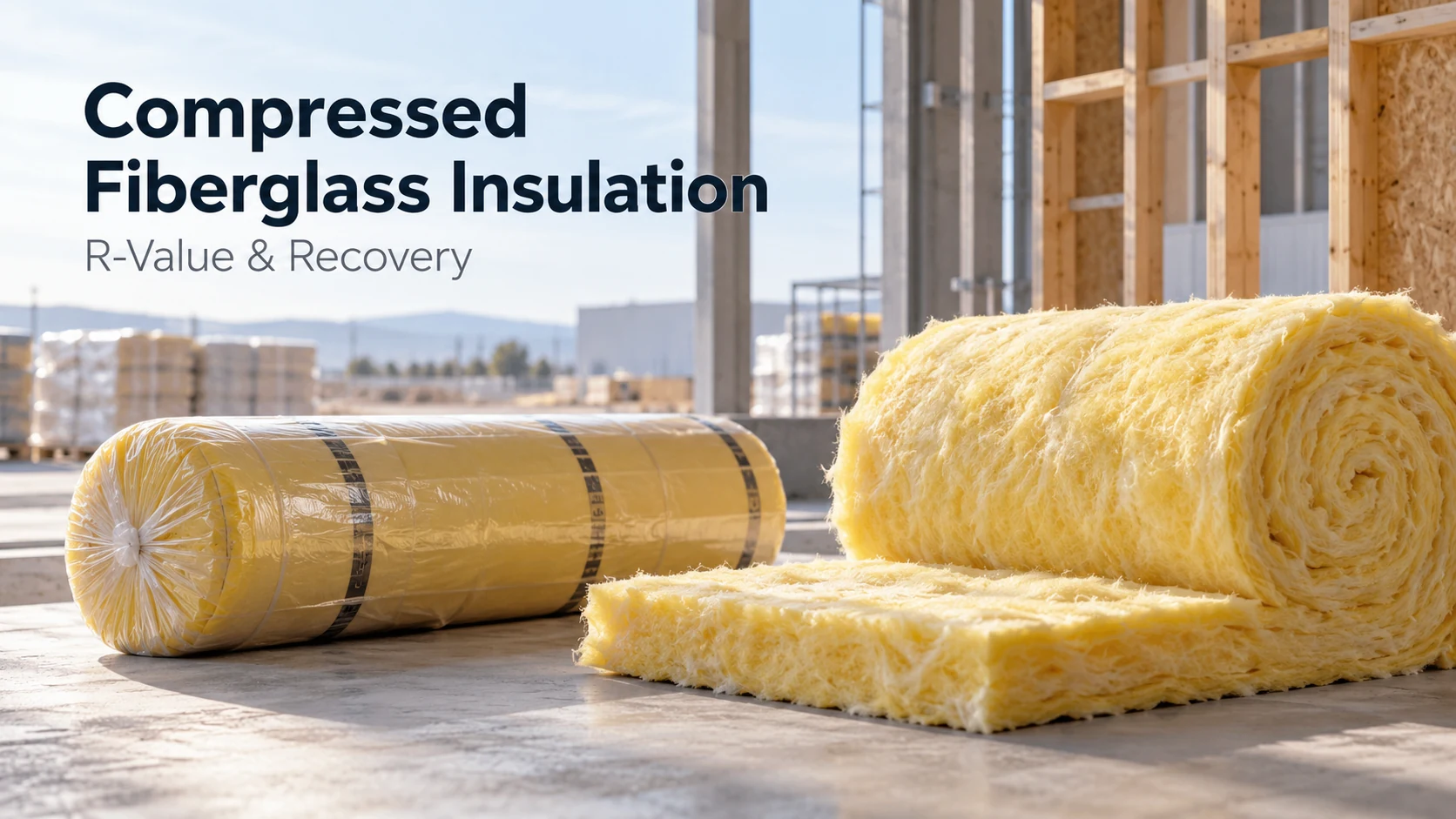
What Happens When Fiberglass (Glass Wool) Insulation Is Compressed?
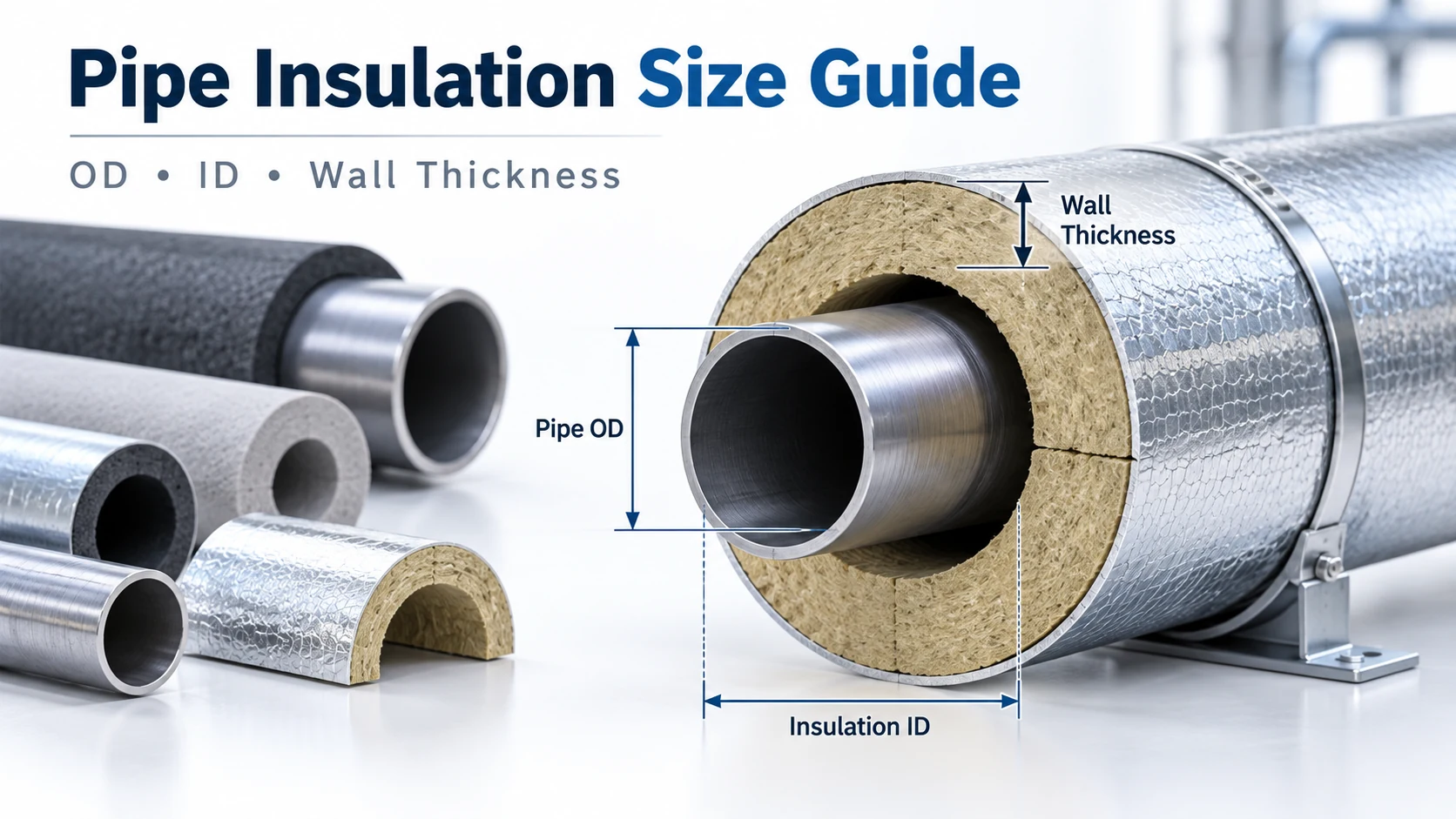
Pipe Insulation Size Guide: How to Match Pipe OD, Insulation ID and Wall Thickness
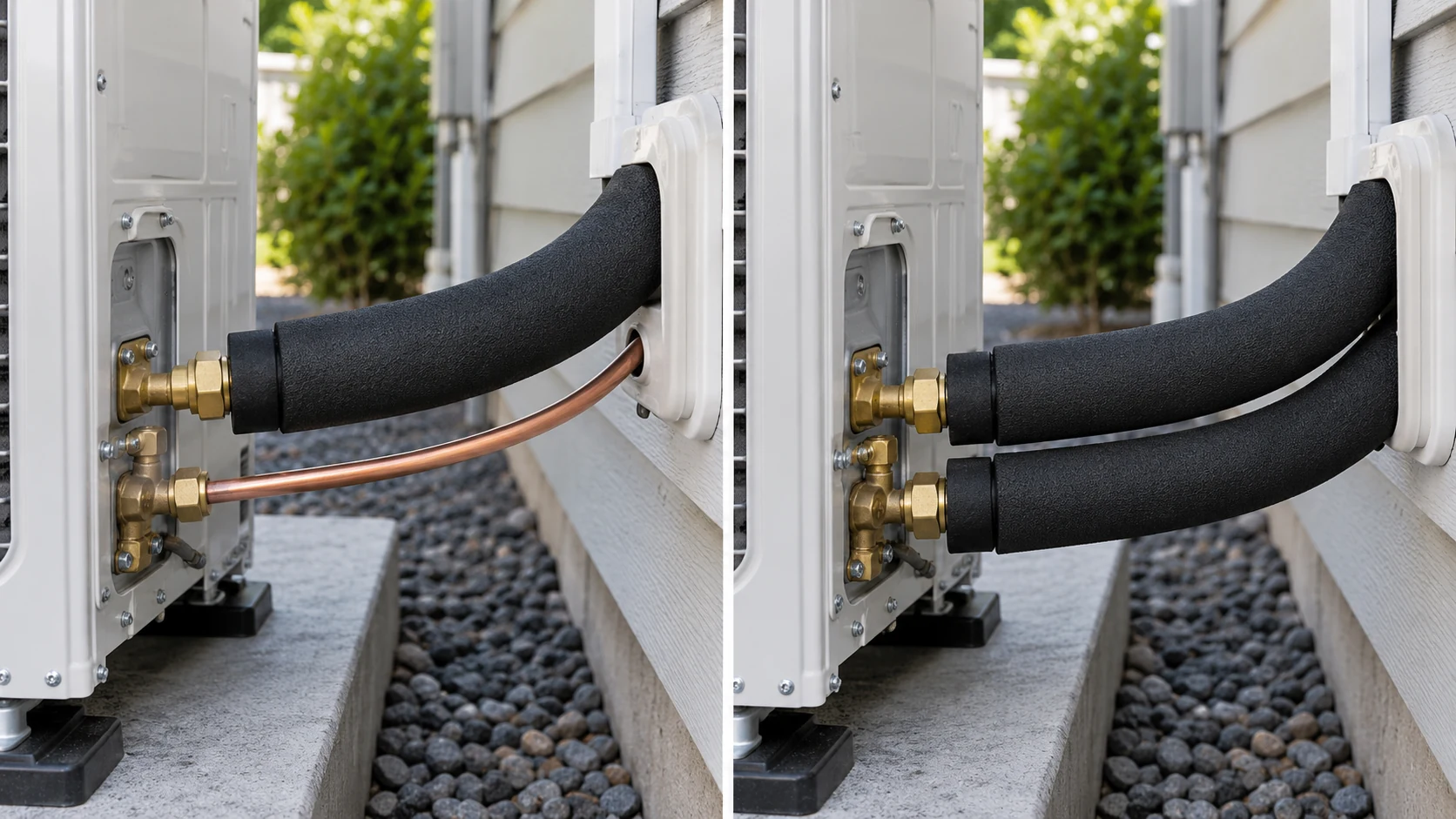
Do Both Refrigerant Lines Need Insulation?
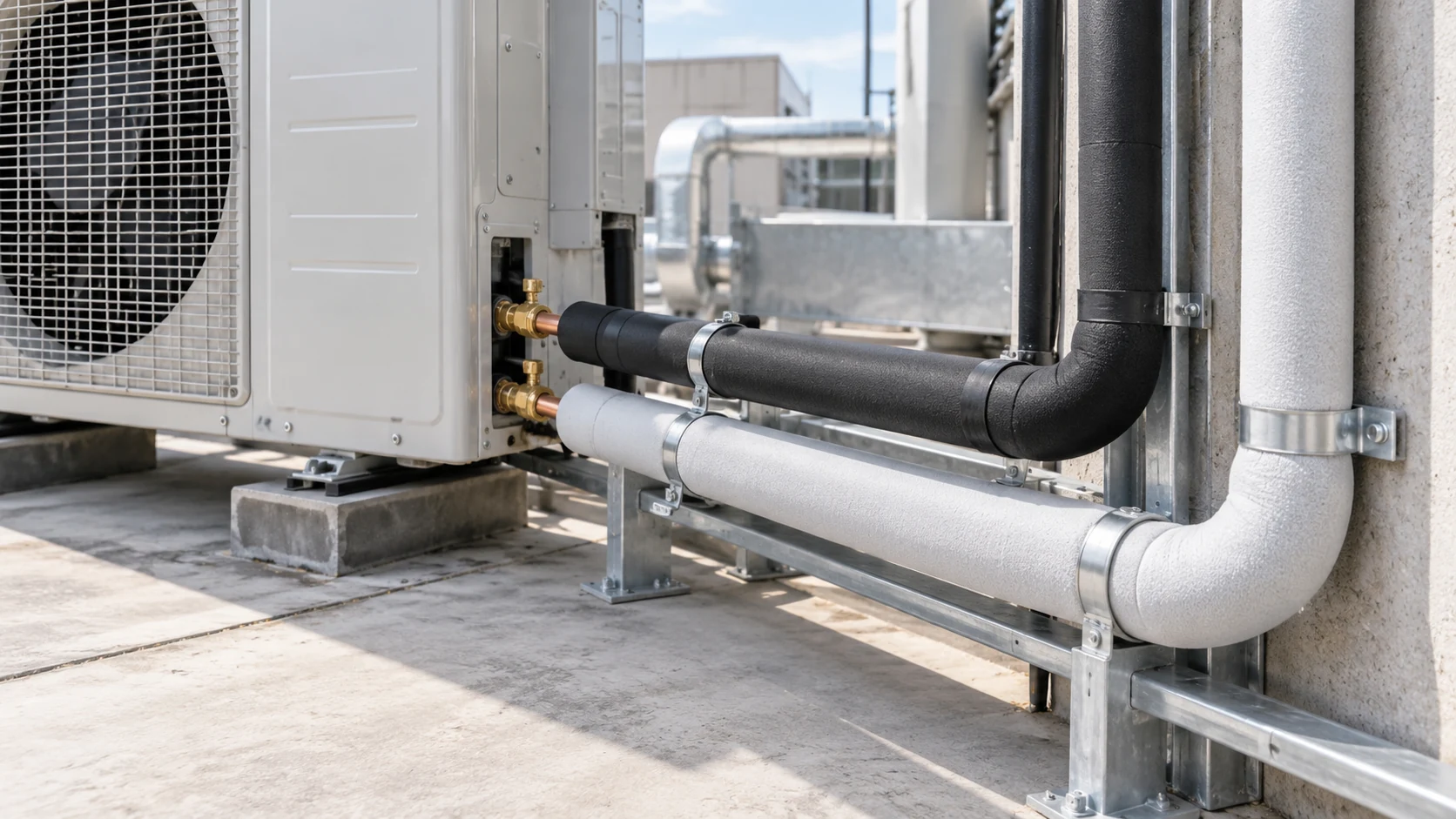
Rubber vs Polyethylene Foam for AC Refrigerant Lines
service
Can you support OEM or private label orders?
Yes. We can support OEM and private label requirements such as customized packaging, labels, product specifications, and brand presentation for distributors, contractors, and project buyers.
Can you arrange international shipping?
Yes. We can help arrange international shipping by sea, air, or express depending on the order volume and delivery needs. We can also work with your appointed freight forwarder if required.
How do you pack insulation products for export?
Products are packed according to material type and shipping requirements. Common options include plastic bags, cartons, woven bags, pallets, or customized export packaging to help protect the goods during transportation.
FAQ
Do you provide samples before bulk orders?
Yes, samples can be provided for quality checking before bulk purchase. Sample availability, size, and delivery cost may vary depending on the product and destination.
Leave a message
Have any questions or concerns about our products? Please leave us a message here and our team will get back to you promptly.
Your queries, ideas, and collaboration opportunities are just a click away. Let’s start a conversation.



















































FUNAS Insulation Material
funasinsulation
funasinsulation
Guangdong FUNAS Insulation Material Co.Ltd