
Pipe Insulation Size Guide: How to Match Pipe OD, Insulation ID and Wall Thickness
A pipe size written on a drawing does not always tell you the pipe’s actual outside diameter. This guide shows contractors and project buyers how to move from pipe designation to actual OD, insulation ID and wall thickness without mixing up the measurements.
- Pipe Size, Pipe OD, Insulation ID and Wall Thickness Are Different Measurements
- Why a 1-Inch Pipe May Not Measure 1 Inch OD
- Steel and Iron Pipe: NPS Is a Nominal Size
- Copper Water Tube Uses Its Own Nominal Size Convention
- ACR and Refrigeration Tubing Is Commonly Listed by Actual OD
- Pipe Insulation Size Chart: Start With the Actual Pipe OD
- Common Copper Water Tube Sizes
- Common ACR and Refrigeration Tube Sizes
- Common NPS Steel Pipe Sizes
- How to Match Pipe OD to Insulation ID
- FUNAS Standard Pipe Insulation Size Availability
- How to Measure an Existing Pipe Before Ordering Insulation
- How Tight Should Rubber Foam Pipe Insulation Fit?
- Straight Pipe Size Does Not Automatically Solve Fittings
- Insulation ID and Wall Thickness Solve Two Different Problems
- What Should You Send When Requesting Pipe Insulation?
- FAQ
A buyer asks for insulation for a “1-inch pipe.” That sounds specific, but it may still be missing the dimension that matters most for fit: the actual pipe outside diameter.
A 1-inch nominal steel pipe, a 1-inch copper water tube and a tube described by its actual 1-inch OD are not the same size. Before ordering preformed pipe insulation, identify the piping system first, then work from the actual OD.
The practical sequence is simple: pipe designation → actual pipe OD → insulation ID → wall thickness. The first three determine fit. Wall thickness is a separate thermal and condensation-control decision.
Pipe Size, Pipe OD, Insulation ID and Wall Thickness Are Different Measurements
Most sizing mistakes start because two different dimensions are treated as the same thing. Keep the following four terms separate when checking a drawing, measuring a line or preparing an RFQ.
| Term | What It Means | What Buyers Need to Check |
|---|---|---|
| Nominal pipe size | A size designation used by a particular piping system | Do not assume the stated number is the measured OD |
| Pipe OD | The actual outside diameter of the pipe or tube | Use this as the physical reference for insulation fit |
| Insulation ID | The inside diameter or bore of the insulation tube | Check the manufacturer's intended pipe-size fit |
| Wall thickness | The radial thickness of insulation around the pipe | Select separately for thermal and condensation requirements |
For example, an insulation specification written as 25 mm ID × 20 mm wall thickness contains two dimensions. The 25 mm figure describes the bore of the insulation tube. The 20 mm figure describes the insulation layer around that bore.
Why a 1-Inch Pipe May Not Measure 1 Inch OD
“Pipe size” does not mean the same thing across every piping system. Steel pipe, copper water tube and refrigeration tubing use different size conventions, so the material and system should be identified before an insulation size is selected.
Steel and Iron Pipe: NPS Is a Nominal Size
Steel piping is commonly specified using Nominal Pipe Size, or NPS. The number is a designation rather than a direct measurement of the outside diameter.
For instance, NPS 1 pipe has an actual OD of about 1.315 in. (33.4 mm), while NPS 2 pipe has an actual OD of about 2.375 in. (60.3 mm).
Pipe schedule changes the pipe wall thickness and internal bore. For these common NPS sizes, it does not change the outside diameter used to establish the insulation fit.
Copper Water Tube Uses Its Own Nominal Size Convention
Copper water tube also uses nominal sizes that differ from the measured OD. The Copper Development Association Copper Tube Handbook publishes dimensional tables for Types K, L and M copper tube as well as ACR tubing.
A nominal 1/2 in. copper water tube, for example, has an actual OD of 5/8 in. A nominal 1 in. copper water tube has an actual OD of 1-1/8 in.
That difference matters when the purchase request says only “1/2-inch copper pipe insulation.” The buyer still needs to clarify which copper sizing convention is being used.
ACR and Refrigeration Tubing Is Commonly Listed by Actual OD
Air-conditioning and refrigeration field-service tubing is commonly identified by its outside diameter. A 1/2 in. ACR tube therefore has an actual OD of 1/2 in.
That is different from nominal 1/2 in. copper water tube, which has a 5/8 in. OD.
This is one reason refrigeration enquiries should include the actual tube OD instead of relying only on a description such as “1/2-inch copper.”
Pipe Insulation Size Chart: Start With the Actual Pipe OD
The following charts are dimensional references. Their purpose is to identify the pipe OD before moving to the insulation manufacturer's available bore sizes.
They are not a universal insulation fit chart. Do not take a pipe OD from one table and automatically assume that an insulation tube with the nearest printed ID is approved for that pipe. Check the insulation manufacturer's sizing information as the next step.
Common Copper Water Tube Sizes
| Nominal Copper Size | Actual OD (in.) | Actual OD (mm, approx.) |
|---|---|---|
| 1/4 in. | 3/8 in. | 9.53 mm |
| 3/8 in. | 1/2 in. | 12.70 mm |
| 1/2 in. | 5/8 in. | 15.88 mm |
| 3/4 in. | 7/8 in. | 22.23 mm |
| 1 in. | 1-1/8 in. | 28.58 mm |
| 1-1/4 in. | 1-3/8 in. | 34.93 mm |
| 1-1/2 in. | 1-5/8 in. | 41.28 mm |
| 2 in. | 2-1/8 in. | 53.98 mm |
Common ACR and Refrigeration Tube Sizes
| Listed ACR Tube Size | Actual OD (in.) | Actual OD (mm, approx.) |
|---|---|---|
| 1/4 in. | 1/4 in. | 6.35 mm |
| 3/8 in. | 3/8 in. | 9.53 mm |
| 1/2 in. | 1/2 in. | 12.70 mm |
| 5/8 in. | 5/8 in. | 15.88 mm |
| 3/4 in. | 3/4 in. | 19.05 mm |
| 7/8 in. | 7/8 in. | 22.23 mm |
| 1-1/8 in. | 1-1/8 in. | 28.58 mm |
Common NPS Steel Pipe Sizes
| Nominal Pipe Size | Actual OD (in.) | Actual OD (mm, approx.) |
|---|---|---|
| NPS 1/2 | 0.840 in. | 21.3 mm |
| NPS 3/4 | 1.050 in. | 26.7 mm |
| NPS 1 | 1.315 in. | 33.4 mm |
| NPS 1-1/4 | 1.660 in. | 42.2 mm |
| NPS 1-1/2 | 1.900 in. | 48.3 mm |
| NPS 2 | 2.375 in. | 60.3 mm |
The three tables show why “1 inch” is not enough information on its own. Always keep the pipe system beside the size when preparing an insulation schedule.
How to Match Pipe OD to Insulation ID
Once the actual pipe OD is known, move to the insulation manufacturer's size range.
Do not treat insulation ID as a universal conversion from pipe OD. Manufacturers may design their bore sizes around particular piping systems, dimensional tolerances or fitting requirements. The Armacell Pipe Selector Guide, for example, lists insulation ID and the pipe sizes it is intended to fit as separate dimensions.
For a FUNAS project, the current NBR/PVC rubber foam pipe insulation range should be checked by both inner diameter and wall thickness.
The standard range covers 6–108 mm IDs and 9–30 mm wall thicknesses, but not every ID is stocked as a standard combination at every thickness.
FUNAS Standard Pipe Insulation Size Availability
| Wall Thickness | Standard Inner Diameters | Standard Length |
|---|---|---|
| 9 mm | 6, 10, 13, 16, 19, 25, 32, 43, 51, 60 mm | 1.8 m |
| 13 mm | 6, 10, 13, 16, 19, 25, 34, 43, 48 mm | 2.0 m |
| 15 mm | 6, 10, 13, 16, 19 mm | 2.0 m |
| 20 mm | 6, 10, 13, 16, 19, 22, 25, 28, 34, 43, 48, 60 mm | 2.0 m |
| 25 mm | 25, 28, 34, 43, 48 mm | 2.0 m |
| 30 mm | 22, 25, 28, 34, 43, 48, 60, 76, 89, 108 mm | 2.0 m |
This is an availability table, not a universal pipe-to-insulation conversion table. If the pipe OD falls between the listed bore sizes, or the required ID and wall thickness combination is not shown, confirm the intended fit before placing the order.
FUNAS also supports custom dimensions subject to production confirmation.
Be careful with inch labels as well. A metric product size may be shown beside a familiar inch description for purchasing convenience, but the actual metric dimension still controls. Do not assume that 25 mm and exactly 1.000 in. are interchangeable in every piping system.
How to Measure an Existing Pipe Before Ordering Insulation
Existing mechanical rooms are not always accompanied by a clean pipe schedule. In that situation, measure the pipe instead of guessing from its appearance.
- Identify the pipe or tube type. Note whether it is copper water tube, ACR tubing, steel pipe or another system.
- Measure the outside diameter. Measure across the outside of the bare pipe, not the pipe bore.
- Use circumference if direct access is difficult. Measure around the pipe and calculate OD using circumference ÷ 3.1416.
- Check the project drawing. Confirm whether the size shown is nominal size, NPS, tube OD or another designation.
- Check the insulation manufacturer's sizing information. Use the actual OD to confirm which insulation bore is intended for the line.
- Confirm wall thickness separately. Do not use the bore size to decide the insulation thickness.
If existing insulation is still on the line, measuring over the insulation will not give the pipe OD. Remove or open a suitable section where site procedures allow, or use reliable project records to confirm the original pipe dimension.
How Tight Should Rubber Foam Pipe Insulation Fit?
Rubber foam is flexible, but flexibility is not a reason to force the wrong size onto a pipe.
A tube that is clearly too small may stretch during installation. That can reduce the effective insulation thickness and leave continuous tension at the longitudinal seam. A tube that is too large may leave an unintended loose fit.
If a tube is unusually difficult to install, recheck the pipe OD and the selected insulation size before assuming that more force is needed.
This is also an installation issue, not just a purchasing issue. The FUNAS guide to rubber foam insulation installation mistakes covers problems caused by stretching, compression, open seams, fittings and supports.
Straight Pipe Size Does Not Automatically Solve Fittings
Elbows, couplings, tees, valves and reducers should be checked separately from straight pipe runs. Their outside geometry can be larger or more complex than the straight pipe OD.
Do not assume that a tube selected for a straight line will slide over every coupling or fitting without a separate installation detail. Depending on the system, fittings may require a different tube size, fabricated tube sections or sheet insulation.
Insulation ID and Wall Thickness Solve Two Different Problems
Insulation ID is mainly a fit question. It tells you which pipe or tube the preformed insulation is intended to fit around.
Wall thickness is a thermal-design question. It is selected according to the application, service temperature, ambient temperature, humidity, pipe size, insulation performance and project requirements.
Do not choose a wall thickness simply because it appears beside the required ID in a catalogue.
Cold-service projects in humid conditions need a separate condensation check. The FUNAS guide to insulation thickness for hot and humid conditions covers dew point, operating temperature, pipe diameter and thermal data in more detail.
For refrigeration work, pipe function also matters. The article on refrigerant line insulation explains why suction, liquid and other refrigerant lines should be checked against the actual system design rather than insulated according to diameter alone.
What Should You Send When Requesting Pipe Insulation?
A supplier does not need the buyer to calculate every insulation dimension in advance. A clear pipe schedule is more useful than an uncertain insulation ID.
For each pipe size, provide:
- Pipe or tube material and system
- Nominal pipe size or drawing designation, if available
- Actual pipe OD
- Required insulation wall thickness
- Pipe length or quantity by size
- Application, such as chilled water or refrigerant piping
- Operating temperature where relevant
- Required facing or tube configuration
- Project documentation or test-report requirements
If the consultant or project specification already states a required insulation ID, include it as well. The supplier can then compare the stated ID, pipe OD and available product size before quotation.
For projects with several pipe diameters, send the quantities by size instead of one combined total. A schedule such as “22 mm OD × 20 mm wall × 600 m” is far easier to check than “2,000 m of rubber foam pipe insulation.”
FAQ
How do I know what size pipe insulation I need?
Start with the piping system and actual pipe OD. Once the OD is confirmed, check the insulation manufacturer's sizing information for the appropriate bore. Choose the wall thickness separately according to the project specification and service conditions.
Does insulation ID need to be exactly the same as pipe OD?
Not necessarily. The insulation must be sized for the pipe OD, but manufacturers may use bore tolerances or pipe-size mappings that are not a simple one-to-one numerical match. Use the manufacturer's intended fit rather than choosing the nearest ID by assumption.
Why is a 2-inch pipe not always 2 inches OD?
Because systems such as NPS use nominal size designations. NPS 2 steel pipe, for example, has an actual outside diameter of about 2.375 in. The nominal size identifies the piping system size; it is not always a physical OD measurement.
How can I measure a pipe if there is no room to measure straight across it?
Measure the circumference around the bare pipe with a flexible tape. Divide the circumference by 3.1416 to estimate the outside diameter, then compare the result with the relevant pipe or tube dimensional table.
What should I check if rubber foam tubing is difficult to slide onto the pipe?
Check the actual pipe OD and the insulation size first. Then look for couplings, fittings, surface obstructions or an incorrect installation method. Do not rely on heavy stretching to make an undersized tube fit. For a bulk quotation, sample request, custom-size check or technical document request, send FUNAS the pipe system, actual OD, required wall thickness, quantity and application so the available rubber foam pipe specification can be confirmed before ordering.
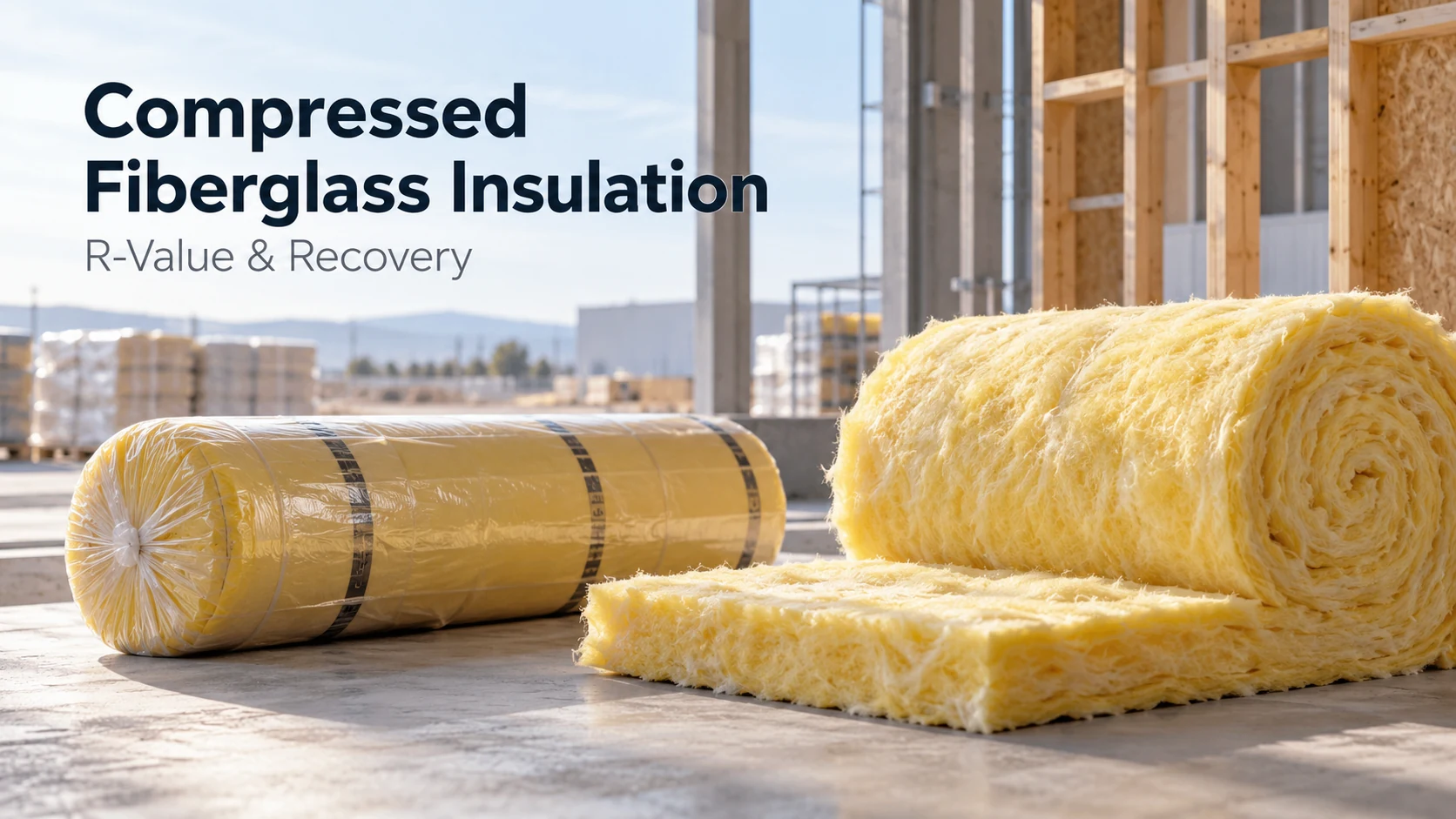
What Happens When Fiberglass (Glass Wool) Insulation Is Compressed?
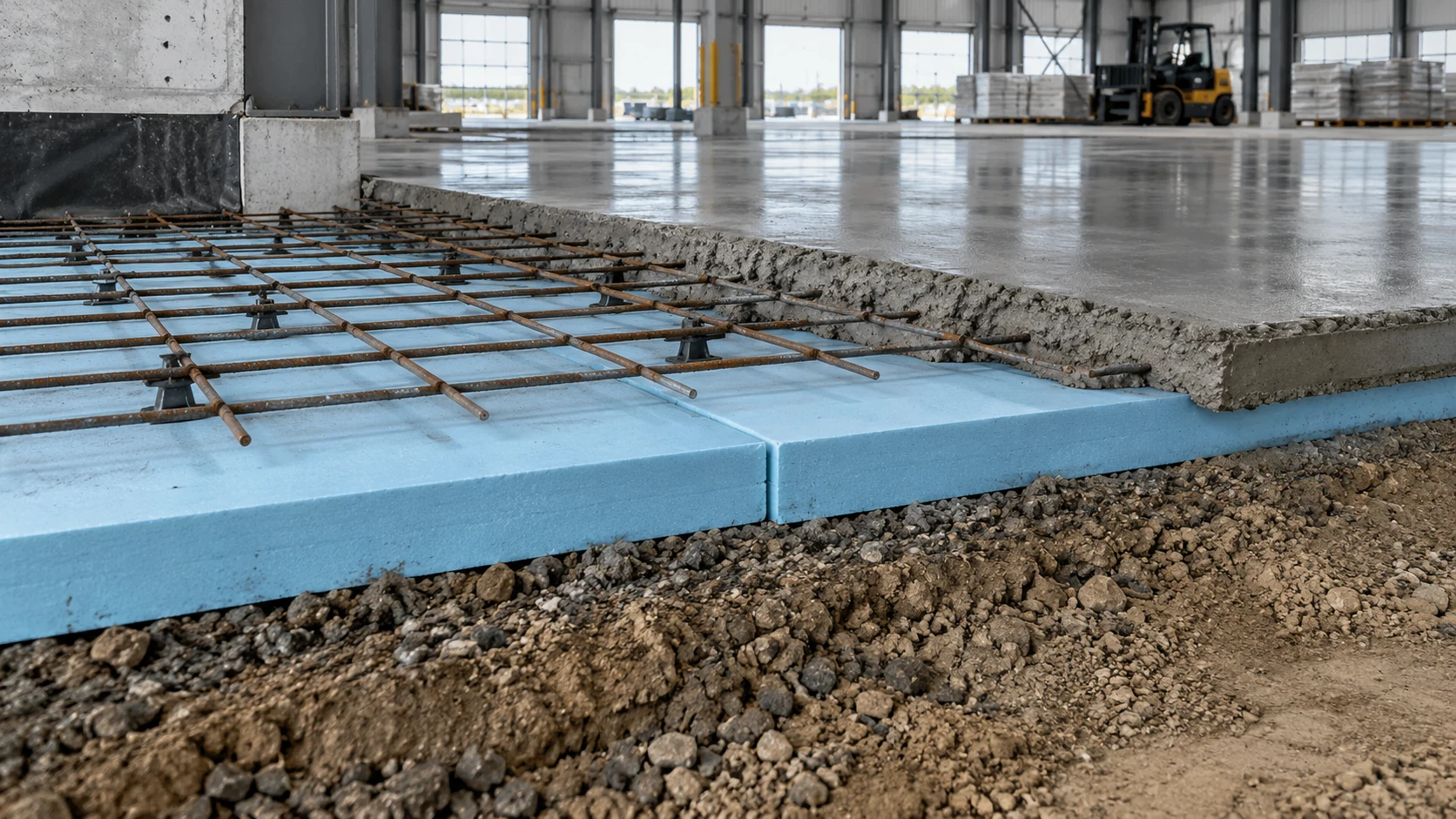
What XPS Compressive Strength Do I Need Under a Concrete Slab?
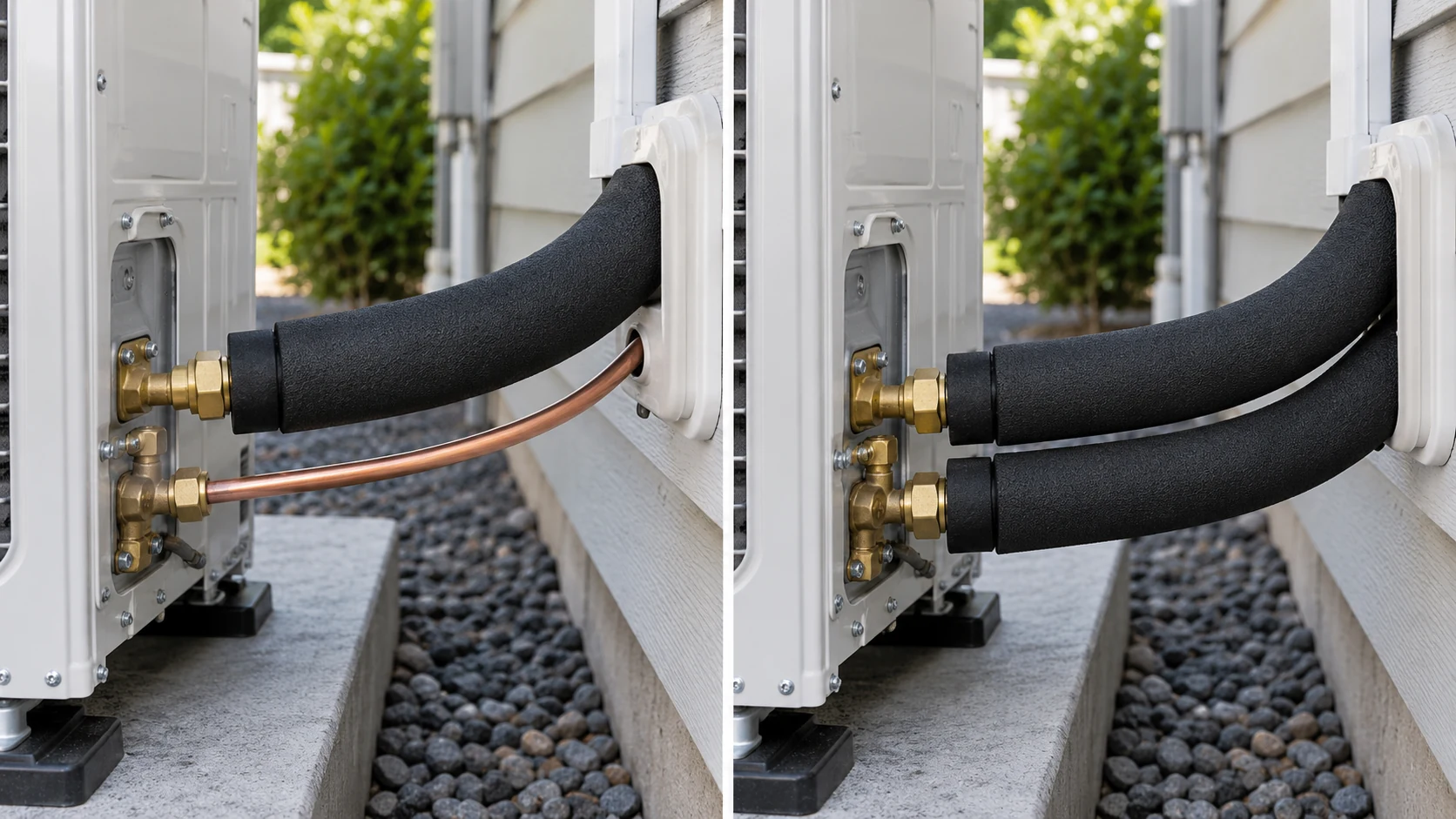
Do Both Refrigerant Lines Need Insulation?
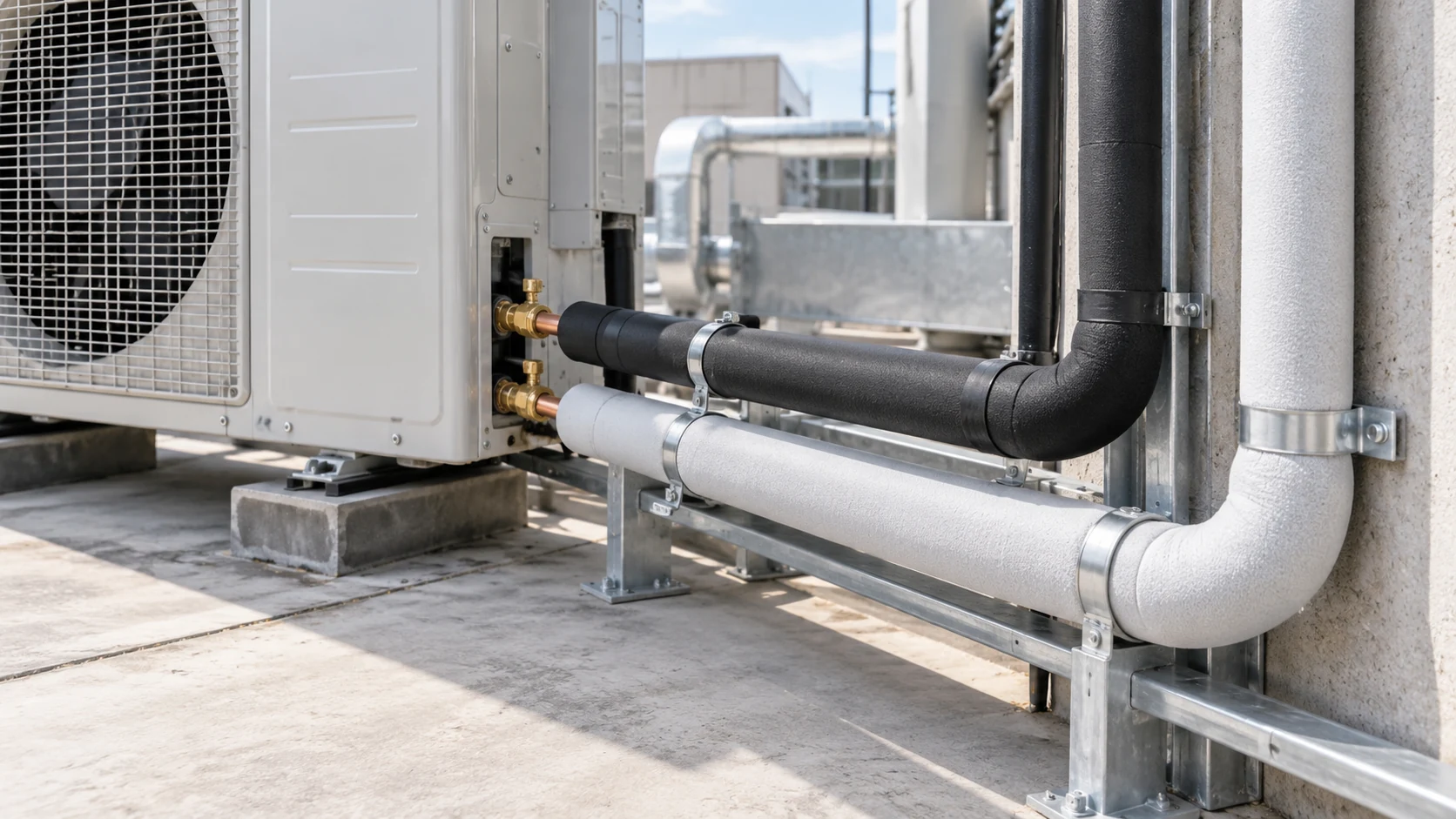
Rubber vs Polyethylene Foam for AC Refrigerant Lines
service
Can you support OEM or private label orders?
Yes. We can support OEM and private label requirements such as customized packaging, labels, product specifications, and brand presentation for distributors, contractors, and project buyers.
What certificates or test reports can you provide?
We can provide available certificates, test reports, and product documents according to the product type and project requirements. If your project requires a specific standard, please confirm with us before ordering.
FAQ
What information should I provide to get a quotation?
To prepare an accurate quotation, please provide the product type, size, thickness, density or specification, quantity, application, destination port or country, and any special requirements such as fire rating, facing material, adhesive backing, or packaging.
What insulation products do you supply?
We supply rubber foam insulation, glass wool insulation, rock wool insulation, XPS insulation boards, acoustic foam products, and thermal insulation adhesive. These products are commonly used in HVAC systems, construction projects, industrial equipment, and acoustic applications.
Leave a message
Have any questions or concerns about our products? Please leave us a message here and our team will get back to you promptly.
Your queries, ideas, and collaboration opportunities are just a click away. Let’s start a conversation.



















































FUNAS Insulation Material
funasinsulation
funasinsulation
Guangdong FUNAS Insulation Material Co.Ltd