
How to Install Pipe Insulation: Step-by-Step Guide
- How to Install Pipe Insulation: A Step-By-Step Guide from FUNAS
- Understanding Pipe Insulation and Its Importance
- Preparing for Pipe Insulation Installation
- Step-by-Step Guide: How to Install Pipe Insulation
- Special Tips for Different Pipes and Environments
- Maintenance and Care Tips After Installation
- Why Choose FUNAS Insulation Solutions?
- Frequently Asked Questions (FAQs)
How to Install Pipe Insulation: A Step-By-Step Guide from FUNAS
As energy efficiency and safety become top priorities across industrial and commercial sectors, pipe insulation has never been more critical. At FUNAS, a leading supplier of rubber and plastic insulation, rock wool, and glass wool products, we understand the importance of both product quality and correct installation. Whether you’re working in petroleum, electric power, metallurgy, HVAC, or cold storage, well-installed pipe insulation ensures thermal efficiency, reduces energy loss, and extends the lifespan of your system. This definitive, guide will show you how to install pipe insulation, covering both the technical steps and vital best practices drawn from decades of expertise.
Understanding Pipe Insulation and Its Importance
Why Proper Pipe Insulation Matters
Correct pipe insulation isn’t just about saving energy—it’s integral for safeguarding against temperature fluctuations, condensation, and even mechanical damage. In industries like petrochemical, power, or refrigeration, poorly insulated pipes can lead to significant heat loss, energy wastage, production inefficiencies, and even safety hazards. FUNAS’s range of insulation products is engineered to provide reliable thermal protection for pipelines of all sizes and operating environments.
Types of Pipe Insulation Materials
Before you start insulation installation, it’s crucial to select the right material. At FUNAS, we offer:
- Rubber and Plastic Insulation: Flexible, moisture-resistant, and with excellent thermal performance.
- Rock Wool Insulation: Superb for high-temperature applications and fire resistance.
- Glass Wool Insulation: Lightweight, versatile, and highly effective for both thermal and acoustic insulation.
Choosing the most suitable material depends on the operating temperature, location, environment, and performance requirements.
Preparing for Pipe Insulation Installation
Safety First: Essential Precautions
Prior to beginning any installation, ensure all staff adhere to proper safety protocols. Wear gloves, protective eyewear, and masks if handling fiberglass or rock wool to prevent irritation.
Gather the Required Tools and Materials
Prepare the following tools for a seamless installation:
- Measuring tape
- Utility knife/scissors
- Protective gloves and goggles
- Insulation adhesive or tape (as per product requirement)
- Pipe insulation material (pre-cut or rolls)
- Cleaning cloth or brush
Cleaning and Inspecting the Pipes
Always install insulation on clean, dry pipes. Use a brush or cloth to remove any dust, grease, or debris. Inspect for existing damage or leaks; repair before proceeding with insulation.
Step-by-Step Guide: How to Install Pipe Insulation
Step 1: Measure and Cut the Insulation
- Accurately measure the length and diameter of each section of the pipe to ensure correct sizing.
- Mark the measurements on your chosen insulation material.
- Cut the insulation using a sharp utility knife or scissors. Ensure clean, straight cuts for optimal fit.
Step 2: Fitting the Insulation to the Pipe
- For pre-slit tubular insulation, simply open the slit and slip it over the pipe.
- For roll-type or sheet insulation, wrap the material snugly around the pipe. Overlap seams as instructed by the manufacturer (usually around 10-20 mm).
- For elbows, tees, or complex joints, cut smaller pieces to fit and miter the ends for a seamless finish.
Step 3: Securing the Insulation Material
- Use insulation adhesive or tape to seal the seams and prevent movement or gaps.
- On longer pipe runs, stagger the joints to minimize heat transfer.
- For outdoor or high-humidity environments, consider a vapor barrier or protective jacketing, as recommended by FUNAS for maximal durability.
Step 4: Sealing and Finishing
- Carefully seal all ends, joints, and seams with suitable adhesive, ensuring there are no gaps where heat could escape or moisture could intrude.
- Inspect the entire installation for uniform coverage. Any exposed pipe is a potential weak point in your thermal barrier.
Step 5: Inspection and Quality Assurance
- Double-check for tight seals, uniform appearance, and complete coverage.
- For commercial or industrial installations, periodic inspections are recommended per maintenance protocols.
Special Tips for Different Pipes and Environments
High-Temperature Applications
For steam lines, boilers, or process plants, FUNAS recommends rock wool insulation, which offers superior thermal resistance and fire safety. Always use high-temperature adhesives compatible with this material.
Cold/Outdoor Applications
Rubber and plastic insulation from FUNAS provides excellent resistance to moisture, preventing condensation and mold growth. For outdoor pipes, always install a weather-resistant jacketing.
Complex Pipework and Fittings
Use pre-formed insulation pieces for elbows, tees, and flanges where possible. For custom sizes, carefully measure and cut, ensuring all surfaces are covered. Seal all joints for a continuous insulation layer.
Maintenance and Care Tips After Installation
Proper pipe insulation doesn’t end at installation. Regular inspections are essential for:
- Detecting and repairing damaged or loose insulation.
- Checking for signs of condensation or moisture intrusion.
- Ensuring adhesives and vapor barriers remain intact.
FUNAS provides ongoing support, replacement materials, and brand customization services to maintain peak performance of your insulation systems.
Why Choose FUNAS Insulation Solutions?
Since 2011, FUNAS has led the way in innovation, quality, and service in the insulation materials industry. Our headquarters in Guangzhou, with a 10,000-square-meter storage center, ensures rapid product delivery. All FUNAS products are manufactured in compliance with global certifications—CCC, CQC, CE, ROHS, CPR, UL, FM, and ISO standards for quality and environmental management.
Industries worldwide trust our products for:
- Industrial safety and energy savings
- Custom brand solutions
- Reliable, long-lasting performance
Visit our website (https://www.funasinsulations.com/) to explore our extensive range and connect with our technical support team.
Frequently Asked Questions (FAQs)
How do I know which insulation material to use for my pipes?
Select based on temperature range, environment, and performance. FUNAS offers rubber/plastic for cold and condensation control, rock wool for high temperatures, and glass wool for general applications.
Can I install pipe insulation myself?
Yes—smaller projects can use DIY methods. For industrial or high-risk systems, consult FUNAS or certified contractors for professional installation.
Is pipe insulation waterproof?
Rubber and plastic insulation is highly moisture-resistant. For outdoor use, additional jacketing may be required. Always follow manufacturer recommendations.
How often should I inspect my pipe insulation?
We recommend a visual inspection every 6-12 months or after major temperature changes or maintenance cycles.
Does FUNAS offer customized solutions?
Yes, we provide brand customization and tailored products to meet individual project needs. Contact us for more information.
Can pipe insulation prevent pipe freezing?
Properly installed insulation significantly reduces the risk of freezing. However, in extremely cold climates, additional heat tracing may be necessary.
Where can I buy FUNAS insulation products?
Visit our official website or contact our sales team for product availability, technical advice, and logistics support.
For further queries or support on how to install pipe insulation, reach out to FUNAS—your global partner in insulation innovation and excellence. Protect your investments, enhance energy efficiency, and ensure long-lasting performance with FUNAS insulation solutions.
Best foam board insulation manufacturers and supplier brands
How to Insulate Steam Pipes: Step-by-Step Guide
How to Insulate Pipes in Wall: A Complete Guide by FUNAS
Why Do Some Materials Absorb Sound? Science Behind Acoustics
What is your usual production and delivery time?
Delivery time depends on the product type, order quantity, customization requirements, and shipping destination. Standard products are usually faster to arrange, while customized or large-volume orders may require longer production time.
Can you arrange international shipping?
Yes. We can help arrange international shipping by sea, air, or express depending on the order volume and delivery needs. We can also work with your appointed freight forwarder if required.
What certificates or test reports can you provide?
We can provide available certificates, test reports, and product documents according to the product type and project requirements. If your project requires a specific standard, please confirm with us before ordering.
Do you provide samples before bulk orders?
Yes, samples can be provided for quality checking before bulk purchase. Sample availability, size, and delivery cost may vary depending on the product and destination.
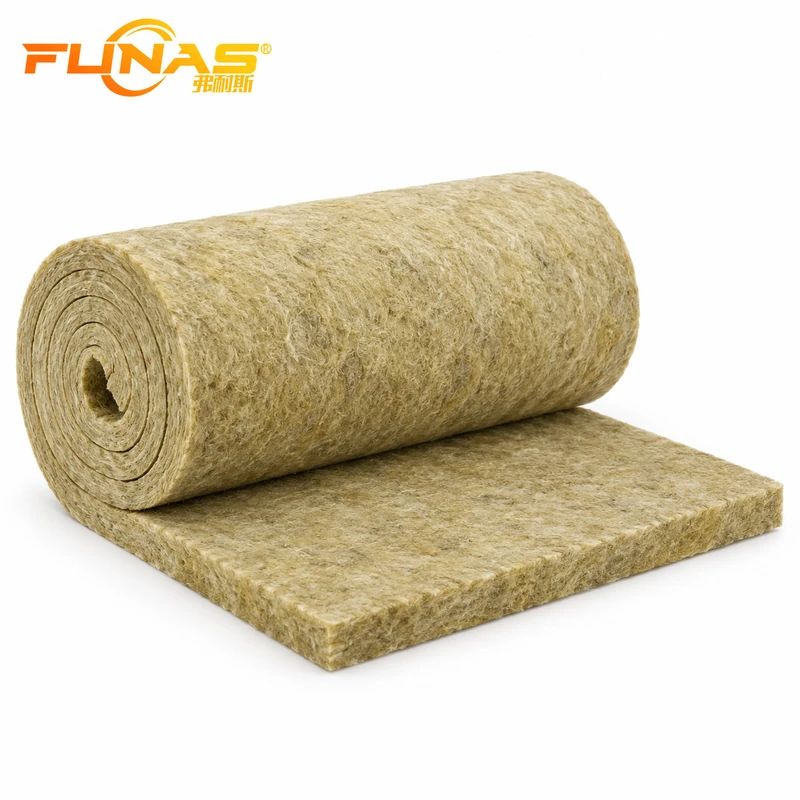
Rock Wool Blanket Roll for Thermal and Acoustic Insulation
FUNAS Rock Wool Blanket Roll is a flexible rock wool blanket supplied in continuous roll form for thermal and acoustic insulation. As a mineral wool blanket insulation product, it is suitable for roofs, walls, steel structures, equipment areas and large industrial surfaces where flexible coverage and easy cutting are required.
This mineral wool insulation roll is available in 80 kg/m³ and 100 kg/m³ densities with 40 mm and 50 mm thickness options. Density, length and width can be customized according to project requirements.
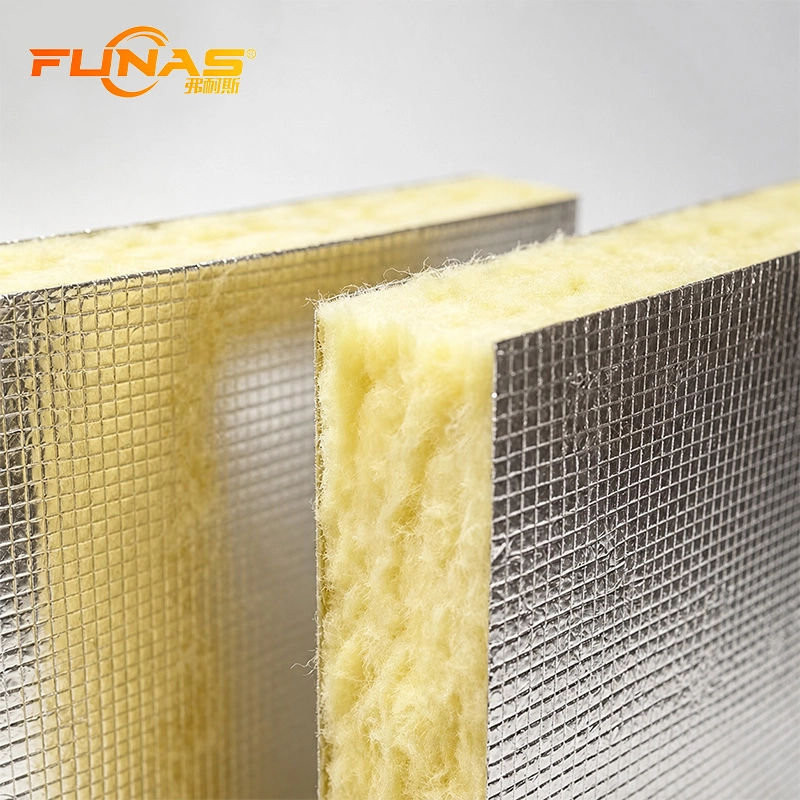
Glass Wool Insulation Board for Building & HVAC Applications
FUNAS glass wool insulation board is a lightweight fiberglass insulation board designed for thermal and acoustic insulation in building, HVAC and industrial projects. The board form provides stable coverage for walls, ceilings, ventilation systems and other areas where sheet-form insulation is required.
Standard options include 32 kg/m³ and 48 kg/m³ densities with 30 mm and 50 mm thicknesses. Each board measures 1.2 × 0.6 m, and aluminum foil facing can be added according to project requirements. Other specifications can be discussed for customized orders.
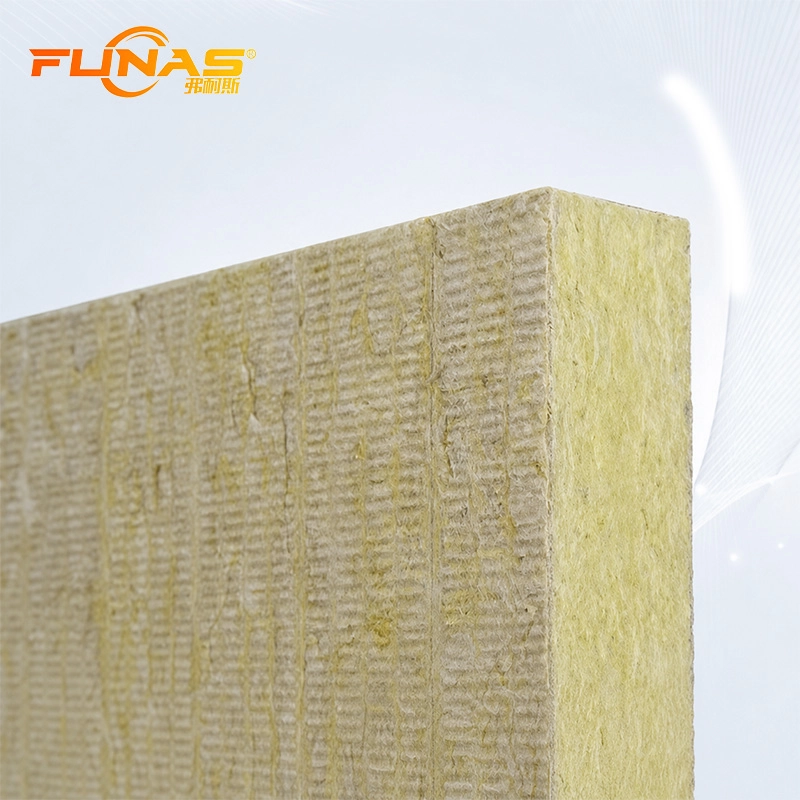
Rock Wool Insulation Board for Thermal and Acoustic Insulation
FUNAS Rock Wool Insulation Board is a semi-rigid mineral wool board designed for thermal insulation, sound absorption and fire-resistant insulation applications. Available in multiple density options, the board provides stable coverage for walls, roofs, partitions and industrial insulation projects.
Standard density options range from 40–120 kg/m³, with a regular thickness of 50 mm and board size of 1.2 × 0.6 m. Aluminum foil facing and customized specifications are available upon request.
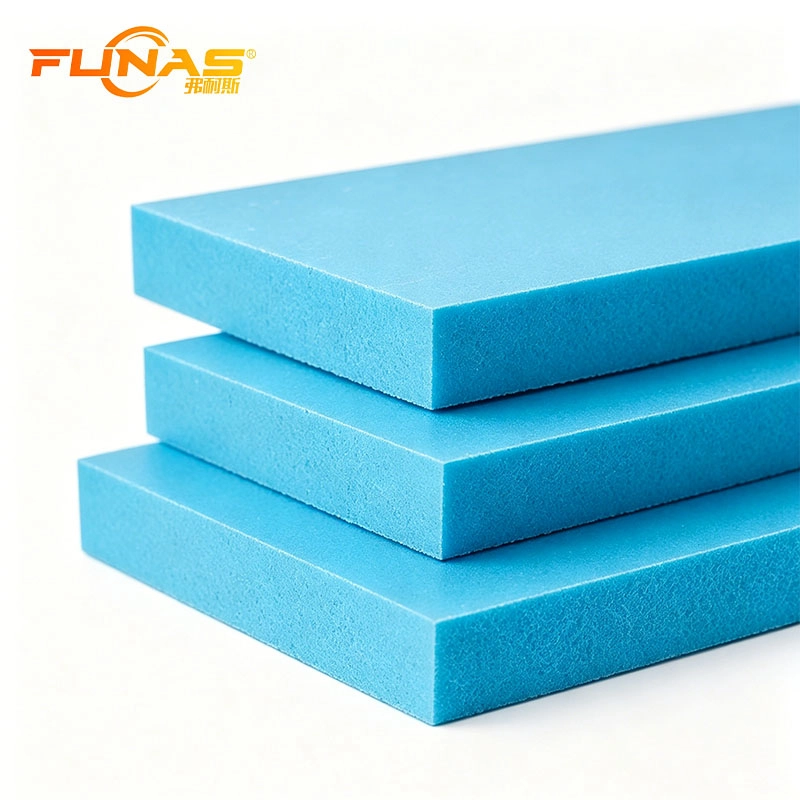
XPS Insulation Board – Extruded Polystyrene Foam Board
FUNAS XPS insulation board is a rigid extruded polystyrene foam board for building thermal insulation. Available in 30–100 mm thicknesses with approx. 300–400 kPa compressive strength options, it can be supplied for roof, wall, floor and under-slab insulation projects. Board dimensions, density and project specifications can be customized, with third-party test data available for compressive and thermal performance.
Leave a message
Have any questions or concerns about our products? Please leave us a message here and our team will get back to you promptly.
Your queries, ideas, and collaboration opportunities are just a click away. Let’s start a conversation.



















































FUNAS Insulation Material
funasinsulation
funasinsulation
Guangdong FUNAS Insulation Material Co.Ltd