
Nitrile Rubber Insulation Price List in Russia: Guide for Buyers and Suppliers
- Nitrile Rubber Insulation Price List in Russia: Market Overview
- Why search for a nitrile rubber insulation price list in Russia
- Key factors that determine nitrile rubber insulation prices in Russia
- Typical product types found on nitrile rubber insulation price lists
- How to read a nitrile rubber insulation price list in Russia
- Import, tariffs and certification considerations for buyers
- Local supply vs import: pricing implications for the Russian market
- Cost components not shown on a price list: logistics and lifecycle costs
- How supplier certifications and factory qualifications affect price
- Cost-saving strategies when buying nitrile rubber insulation in Russia
- Why FUNAS is a competitive partner for nitrile rubber insulation supply to Russia
- How to request a competitive nitrile rubber insulation price list in Russia from suppliers
- Common pricing questions Russian buyers ask suppliers
- Market outlook: trends that could affect nitrile rubber insulation prices in Russia
- Conclusion: Practical steps to get the best nitrile rubber insulation price list in Russia
Nitrile Rubber Insulation Price List in Russia: Market Overview
Why search for a nitrile rubber insulation price list in Russia
Buyers looking for a nitrile rubber insulation price list in Russia are usually preparing for procurement, budgeting, or specification comparison for HVAC, refrigeration, petrochemical, or industrial projects. Commercial buyers—with needs like “buy nitrile rubber insulation Russia” or “nitrile rubber foam price Russia”—want clear unit pricing, delivery times, and compliance documentation to evaluate total landed cost and lifecycle value.
Key factors that determine nitrile rubber insulation prices in Russia
Several core factors shape the nitrile rubber insulation price list in Russia: raw material costs (acrylonitrile, butadiene, and polymer additives), production process (closed-cell nitrile foam vs open-cell), product density and thickness, thermal conductivity, required fire performance, certifications, order quantity, packaging type (rolls, tubes, sheets), shipping method, customs duties, VAT and the ruble exchange rate. Seasonal demand and energy prices can also influence quotes.
Typical product types found on nitrile rubber insulation price lists
Russian price lists commonly include nitrile rubber insulation as: NBR closed-cell foam sheets, NBR tubes for pipe insulation, adhesive-backed NBR tape, pre-formed elbows and fittings, and custom-cut panels. Typical thickness ranges from 3 mm to 50 mm and common densities fall between 50–160 kg/m3 depending on mechanical and thermal requirements. Thermal conductivity for nitrile foam is approximately 0.034–0.040 W/m·K, making it suitable for refrigeration and HVAC insulation.
How to read a nitrile rubber insulation price list in Russia
Russian suppliers often present prices per meter, per square meter, per roll, or per kilogram. For pipes, you may see prices per meter by nominal diameter and wall thickness. When comparing quotes, convert units to a consistent basis (e.g., price per m2 or price per meter for specified thickness) and ask for the product’s density, thermal conductivity, and fire classification. Always request CIF or DDP landed-price options to understand total cost including logistics and duties.
Import, tariffs and certification considerations for buyers
Importing nitrile rubber insulation into Russia requires attention to customs classification, potential import duties and VAT, and local regulatory compliance. Many projects require materials with documented fire safety and performance ratings. Common international certifications—CE, ROHS, CPR, UL, FM—and management certifications like ISO 9001 and ISO 14001 help speed approval. Russian buyers should also confirm acceptance against local standards (GOST or technical specifications) and request full test reports.
Local supply vs import: pricing implications for the Russian market
Local manufacturers can offer shorter lead times and potentially lower freight costs, but may have limited product variety or certification portfolios. Importing nitrile rubber insulation (for example from China) can unlock broader product options, customization, and competitive base prices, yet adds logistics, documentation needs, and currency risk. Large suppliers with regional stock points and reliable certifications can reduce total landed cost and lead time uncertainties.
Cost components not shown on a price list: logistics and lifecycle costs
Beyond the unit price, buyers must budget for shipping, customs clearance, local transport, storage, installation labor, and waste disposal. Nitrile rubber insulation’s long-term performance—resistance to moisture, vibration, and thermal cycling—affects lifecycle cost. Choosing slightly higher-quality material or a trusted brand can reduce maintenance, shrinkage, and energy losses, improving total cost of ownership.
How supplier certifications and factory qualifications affect price
Suppliers that present CE/ROHS/CPR/UL/FM certificates, ISO 9001 quality management, and ISO 14001 environmental certification generally command a High Quality, but they reduce project risk and approval time. For projects in regulated sectors like petrochemical or power generation, suppliers with traceable quality systems and testing documentation are preferred and often required in tender specifications.
Cost-saving strategies when buying nitrile rubber insulation in Russia
To lower procurement costs, consider consolidating orders, standardizing on common thicknesses and sizes, and negotiating volume discounts. Ask suppliers for sample pieces to confirm fit and performance before a full order. Request consolidated shipping and bonded warehousing options to reduce customs friction. Working with manufacturers who offer brand customization and just-in-time deliveries can reduce inventory carrying costs.
Why FUNAS is a competitive partner for nitrile rubber insulation supply to Russia
FUNAS, founded in 2011, integrates research, manufacturing, sales and service and specializes in rubber and plastic insulation, rock wool and glass wool products. FUNAS’s Guangzhou headquarters includes a 10,000-square-meter storage center that supports faster dispatch and consolidated shipments. The company holds CCC and CQC compulsory certifications and international certifications such as CE/ROHS/CPR/UL/FM, as well as ISO 9001 and ISO 14001, making it well-suited to serve projects that require documented compliance. FUNAS also provides brand customization services to meet personalized needs for the Russian market.
How to request a competitive nitrile rubber insulation price list in Russia from suppliers
When requesting a price list, provide clear specifications: product type (sheet, tube, adhesive-backed), thickness, density, required thermal conductivity, fire rating, color, quantity, delivery terms (FOB, CIF, DDP), delivery location in Russia, and required certifications. Ask for unit prices in RUB and a total landed cost. Request lead time, minimum order quantities, sample availability, warranty terms, and packaging method. Competitive suppliers will return an itemized quotation and test certificates.
Common pricing questions Russian buyers ask suppliers
Buyers frequently ask: Is the price per meter or per roll? Are certificates and test reports included? What are typical lead times and MOQ? Can the product be supplied with adhesive backing or machined pre-forms? Will you provide DDP pricing? Reliable suppliers answer these clearly, include technical data sheets and offer options for expedited shipping or stocked items in regional warehouses.
Market outlook: trends that could affect nitrile rubber insulation prices in Russia
Demand for energy-efficient buildings, refrigeration systems, and industrial insulation remains stable, supporting steady demand for nitrile rubber insulation. Price drivers will include raw material trends, global shipping costs, currency fluctuations, and geopolitical trade conditions. Technology improvements in closed-cell foams and greater emphasis on fire-safe materials may shift demand towards higher-spec products. Buyers should monitor raw material markets and maintain flexible procurement strategies.
Conclusion: Practical steps to get the best nitrile rubber insulation price list in Russia
To secure competitive pricing, clearly define technical and certification requirements, compare unit and landed prices, request samples and test certificates, and consider suppliers with regional stock or proven export experience. FUNAS offers comprehensive product ranges, certifications and customization capabilities that make it a viable partner for Russian buyers seeking reliable nitrile rubber insulation supply with clear pricing and documentation.
Contact FUNAS: For tailored quotations, samples and documentation, visit https://www.funasinsulations.com/ to request a price list suitable for your project and delivery needs in Russia.
Note: Prices on any published list can fluctuate. Always request an up-to-date written quotation and confirm all duties, VAT and delivery costs when planning procurement.
FAQ
What affects the nitrile rubber insulation prices in Russia?Market factors include raw material costs (acrylonitrile and butadiene), product density and thickness, thermal and fire performance, certification requirements, shipping and customs duties, order quantity and currency exchange fluctuations.
How are prices typically quoted on a nitrile rubber insulation price list?Suppliers quote per meter, per square meter, per roll, or per kilogram depending on product format. For pipe insulation, quotes may be per meter by nominal diameter. Always confirm units and convert to a comparable basis.
Do I need special certifications to buy nitrile insulation for industrial projects in Russia?Many industrial projects require testing and certification for fire safety and material performance. International certificates (CE, UL, FM) and ISO management system certifications help, but check local standards (GOST or project specifications) before purchase.
Is it cheaper to buy nitrile insulation locally in Russia or import it?Local supply can reduce logistics time and costs, but imports may offer lower unit prices and more product variants. Compare total landed cost, lead times, and supplier documentation when choosing.
How can FUNAS help with nitrile rubber insulation procurement for Russia?FUNAS provides a range of nitrile rubber insulation products, customization, and documentation, backed by certifications (CE/ROHS/CPR/UL/FM, CCC, CQC) and ISO systems. Their Guangzhou stock center speeds up dispatch and can support project timelines. Visit the website to request samples and quotations.
What Materials Absorb Sound? Acoustic Insulation Guide
Everything You Need to Know About mineral wool for industrial use
Roof and Hood Heat Shield Materials 2026 Explained
Does Insulating Pipes Save Money? | Comprehensive Guide from FUNAS
What insulation products do you supply?
We supply rubber foam insulation, glass wool insulation, rock wool insulation, XPS insulation boards, acoustic foam products, and thermal insulation adhesive. These products are commonly used in HVAC systems, construction projects, industrial equipment, and acoustic applications.
Do you provide samples before bulk orders?
Yes, samples can be provided for quality checking before bulk purchase. Sample availability, size, and delivery cost may vary depending on the product and destination.
Can you support OEM or private label orders?
Yes. We can support OEM and private label requirements such as customized packaging, labels, product specifications, and brand presentation for distributors, contractors, and project buyers.
How do you pack insulation products for export?
Products are packed according to material type and shipping requirements. Common options include plastic bags, cartons, woven bags, pallets, or customized export packaging to help protect the goods during transportation.
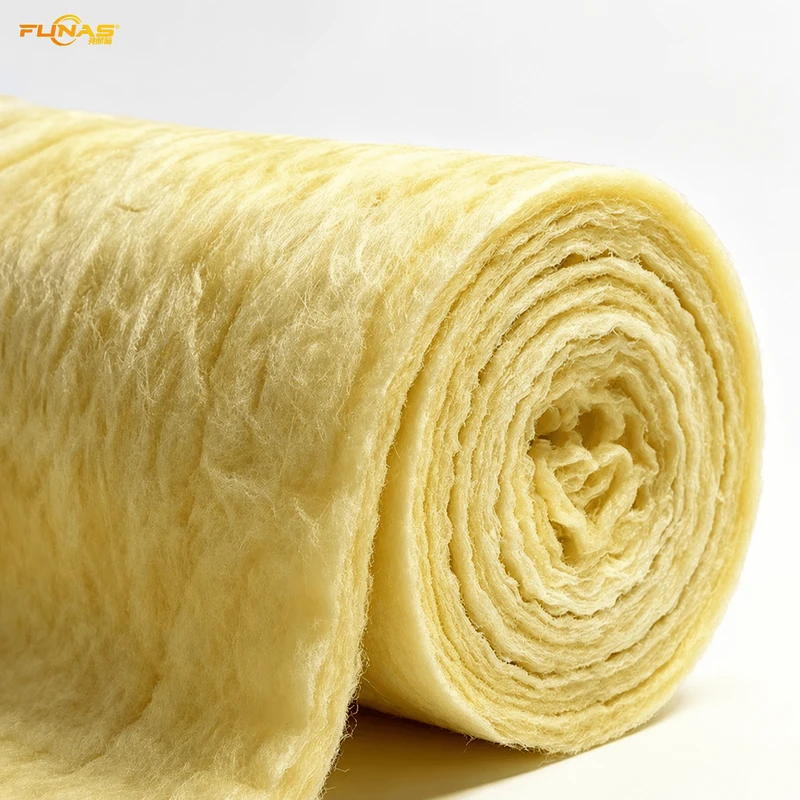
Glass Wool Insulation Rolls for Thermal & Acoustic Insulation
FUNAS glass wool insulation rolls are flexible fiberglass insulation rolls designed for thermal and acoustic insulation in metal roofs, steel buildings, warehouses and HVAC duct systems. The lightweight roll form is easy to cut, wrap and install over large areas, making it suitable for both building and industrial insulation projects.
Available as plain or foil-faced glass wool rolls, the product can be supplied in different densities, thicknesses, widths and roll lengths according to project requirements. Standard options include 32 kg/m³ and 48 kg/m³ density with 30 mm and 50 mm thicknesses.
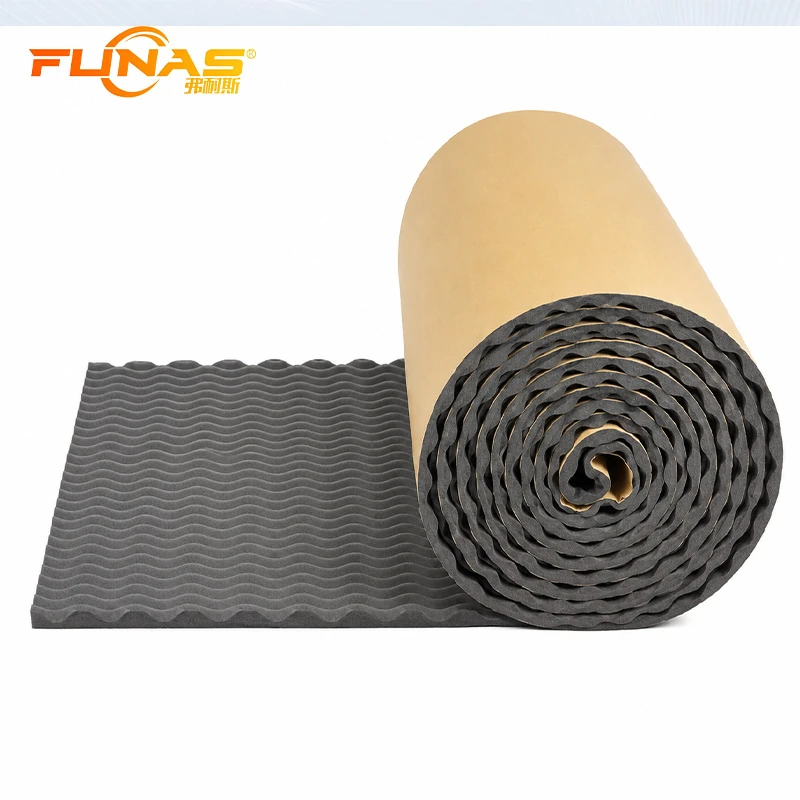
Egg Crate Rubber Acoustic Foam Roll
FUNAS Egg Crate Rubber Acoustic Foam Roll is a sound absorbing foam material with a raised convoluted surface, also known as egg crate acoustic foam or egg box acoustic foam. The profile design helps increase the surface area for acoustic treatment, making it suitable for echo reduction and indoor noise control in studios, KTV rooms, cinemas, offices, home theaters and commercial interior projects.
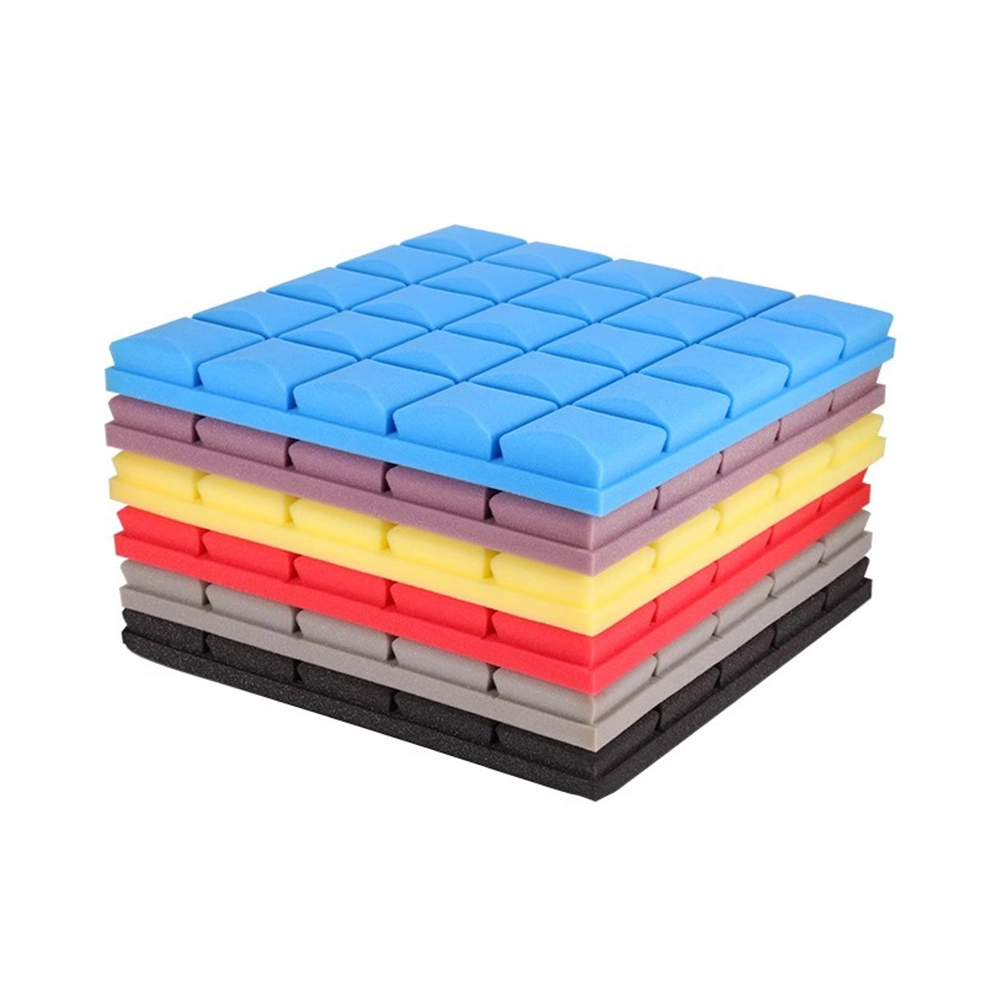
PU Pyramid Acoustic Foam Panel for Sound Absorption
FUNAS PU Pyramid Acoustic Foam Panel is a polyurethane sound absorption panel designed to reduce echo, reverberation and reflected noise in studios, offices, KTV rooms, cinemas and home theater spaces. Its pyramid surface helps increase the contact area for sound waves, supporting clearer indoor acoustics for decoration and acoustic treatment projects. Available in standard panel sizes and thicknesses, the foam can be supplied with adhesive backing upon request and customized for project requirements. It is suitable for contractors, distributors and commercial buyers seeking polyurethane acoustic foam panels for interior sound absorption applications.
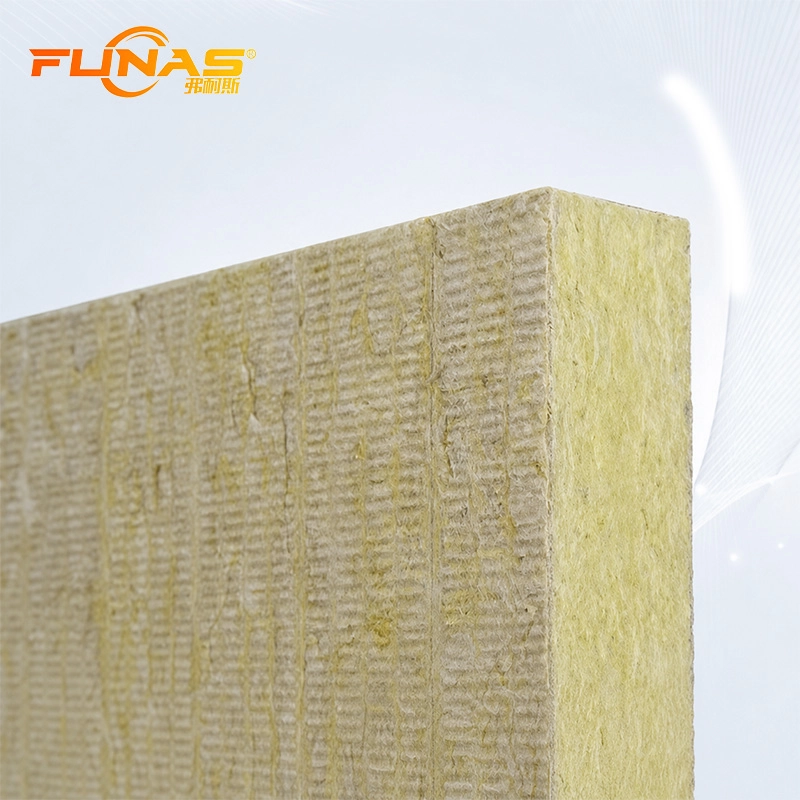
Rock Wool Insulation Board for Thermal and Acoustic Insulation
FUNAS Rock Wool Insulation Board is a semi-rigid mineral wool board designed for thermal insulation, sound absorption and fire-resistant insulation applications. Available in multiple density options, the board provides stable coverage for walls, roofs, partitions and industrial insulation projects.
Standard density options range from 40–120 kg/m³, with a regular thickness of 50 mm and board size of 1.2 × 0.6 m. Aluminum foil facing and customized specifications are available upon request.
Leave a message
Have any questions or concerns about our products? Please leave us a message here and our team will get back to you promptly.
Your queries, ideas, and collaboration opportunities are just a click away. Let’s start a conversation.

















































FUNAS Insulation Material
funasinsulation
funasinsulation
Guangdong FUNAS Insulation Material Co.Ltd