
Underbody Thermal Insulation Solutions for Cars 2026
Underbody Thermal Insulation Solutions for Cars 2026
As the automotive industry advances, the demand for enhanced vehicle performance, safety, and comfort has led to significant innovations in underbody thermal insulation materials. In 2026, car thermal insulation materials have become pivotal in managing heat, reducing noise, and improving overall vehicle efficiency. This article delves into the importance of underbody thermal insulation, explores current solutions, and highlights how companies like FUNAS are at the forefront of this technological evolution.
The Significance of Underbody Thermal Insulation
Underbody thermal insulation plays a crucial role in modern vehicles by addressing several key aspects:
Heat Management: Effective insulation prevents excessive heat from reaching sensitive components, thereby enhancing their longevity and performance.
Noise Reduction: Insulation materials help dampen road and engine noise, contributing to a quieter and more comfortable ride.
Fuel Efficiency: By maintaining optimal temperatures, thermal insulation reduces the energy required for heating and cooling, leading to better fuel economy.
Safety Enhancement: Proper insulation minimizes the risk of heat-related failures and protects occupants from potential hazards.
Innovative Car Thermal Insulation Materials in 2026
The year 2026 has witnessed the emergence of several advanced materials designed to meet the evolving demands of automotive thermal management:
Aerogel-Based Insulation: Aerogels, known for their low thermal conductivity, have been adapted for automotive applications. Research indicates that aerogels derived from sustainably grown bacterial cellulose pellicles offer promising thermal insulation properties, potentially revolutionizing underbody insulation solutions.
Aluminized Heat Barriers: Advanced aluminized heat barriers combine high-reflectivity aluminum layers with integrated insulation cores. These materials effectively deflect radiant heat and provide thermal protection, making them suitable for underbody applications.
Nonporous Polymer Hybrids: Recent studies have developed nonporous polymer hybrids with suppressed heat conduction and enhanced flame retardancy. These materials offer improved thermal insulation and safety features, addressing the growing need for efficient and safe underbody insulation solutions.
Industry Trends and Market Outlook
The automotive heat shield market is experiencing substantial growth, with projections estimating a worth of $12.68 billion by 2032. This growth is driven by factors such as increased vehicle production, advancements in lightweight materials, and the shift towards vehicle electrification. Companies like ElringKlinger AG are leading the way with innovative multilayer shielding solutions, underscoring the industry's commitment to enhancing thermal management in vehicles.
FUNAS: Pioneering Thermal Insulation Solutions
Founded in 2011, FUNAS is an integrated science and technology company specializing in the research, production, sales, and service of thermal insulation materials. With a 10,000-square-meter storage center in Guangzhou, FUNAS offers a diverse range of products, including:
Glass Wool: Provides excellent thermal insulation and soundproofing properties.
Rubber Foam: Offers flexibility and effective thermal insulation.
Rock Wool: Known for its fire-resistant and sound-absorbing qualities.
FUNAS's products are widely used in various industries, including petroleum and petrochemical, electric power, metallurgy, polysilicon, coal chemical industry, central air conditioning, and refrigeration. The company has obtained certifications such as CCC, CQC, CE, ROHS, CPR, UL, and FM, and has passed ISO 9001 and ISO 14001 certifications, reflecting its commitment to quality and environmental standards.
Conclusion
Underbody thermal insulation remains a critical component in automotive design, influencing vehicle performance, safety, and comfort. The advancements in car thermal insulation materials in 2026, coupled with the contributions of companies like FUNAS, are setting new standards in the industry. As the automotive sector continues to evolve, the importance of effective thermal management solutions will only increase, driving further innovation and development in this field.
Frequently Asked Questions (FAQ)
Q1: What are the primary benefits of underbody thermal insulation in vehicles?
A1: Underbody thermal insulation primarily offers heat management, noise reduction, improved fuel efficiency, and enhanced safety by protecting sensitive components from excessive heat and minimizing noise transmission.
Q2: How do aerogel-based insulation materials compare to traditional thermal insulation materials?
A2: Aerogel-based insulation materials provide superior thermal resistance with lower density, making them more effective and lightweight compared to traditional materials.
Q3: What certifications does FUNAS hold for its thermal insulation products?
A3: FUNAS has obtained certifications such as CCC, CQC, CE, ROHS, CPR, UL, and FM, and has passed ISO 9001 and ISO 14001 certifications, ensuring high-quality and environmentally friendly products.
Q4: How does underbody thermal insulation contribute to vehicle fuel efficiency?
A4: By maintaining optimal temperatures within the vehicle, thermal insulation reduces the energy required for heating and cooling, leading to better fuel economy.
Q5: What industries benefit from FUNAS's thermal insulation products?
A5: FUNAS's thermal insulation products are used in industries such as petroleum and petrochemical, electric power, metallurgy, polysilicon, coal chemical industry, central air conditioning, and refrigeration.
For more information or to explore our range of thermal insulation solutions, please visit our website at (https://www.funasinsulations.com/).
Understanding Nitrile Rubber Insulation Price List in Mexico: Guide for Buyers and Specifiers
Top 10 rock wool insulation board Manufacturers and Supplier Brands
Do Gas Pipes Need to Be Insulated? Expert Guide
How to Insulate PVC Pipe: Best Methods & Materials
service
Can you arrange international shipping?
Yes. We can help arrange international shipping by sea, air, or express depending on the order volume and delivery needs. We can also work with your appointed freight forwarder if required.
What is your usual production and delivery time?
Delivery time depends on the product type, order quantity, customization requirements, and shipping destination. Standard products are usually faster to arrange, while customized or large-volume orders may require longer production time.
Can you support OEM or private label orders?
Yes. We can support OEM and private label requirements such as customized packaging, labels, product specifications, and brand presentation for distributors, contractors, and project buyers.
FAQ
Can you provide customized insulation products?
Yes. We can support customized sizes, thicknesses, densities, aluminum foil facing, adhesive backing, colors, packaging, and other project requirements depending on the product type and order quantity.

Glass Wool Insulation Rolls for Thermal & Acoustic Insulation
FUNAS glass wool insulation rolls are flexible fiberglass insulation rolls designed for thermal and acoustic insulation in metal roofs, steel buildings, warehouses and HVAC duct systems. The lightweight roll form is easy to cut, wrap and install over large areas, making it suitable for both building and industrial insulation projects.
Available as plain or foil-faced glass wool rolls, the product can be supplied in different densities, thicknesses, widths and roll lengths according to project requirements. Standard options include 32 kg/m³ and 48 kg/m³ density with 30 mm and 50 mm thicknesses.

XPS Insulation Board – Extruded Polystyrene Foam Board
FUNAS XPS insulation board is a rigid extruded polystyrene foam board for building thermal insulation. Available in 30–100 mm thicknesses with approx. 300–400 kPa compressive strength options, it can be supplied for roof, wall, floor and under-slab insulation projects. Board dimensions, density and project specifications can be customized, with third-party test data available for compressive and thermal performance.
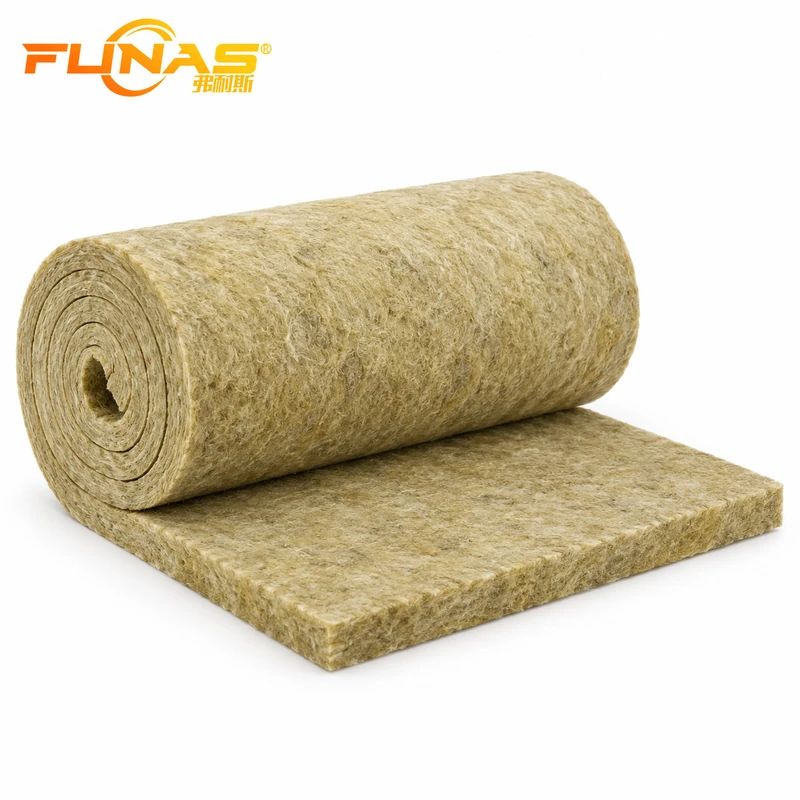
Rock Wool Blanket Roll for Thermal and Acoustic Insulation
FUNAS Rock Wool Blanket Roll is a flexible rock wool blanket supplied in continuous roll form for thermal and acoustic insulation. As a mineral wool blanket insulation product, it is suitable for roofs, walls, steel structures, equipment areas and large industrial surfaces where flexible coverage and easy cutting are required.
This mineral wool insulation roll is available in 80 kg/m³ and 100 kg/m³ densities with 40 mm and 50 mm thickness options. Density, length and width can be customized according to project requirements.
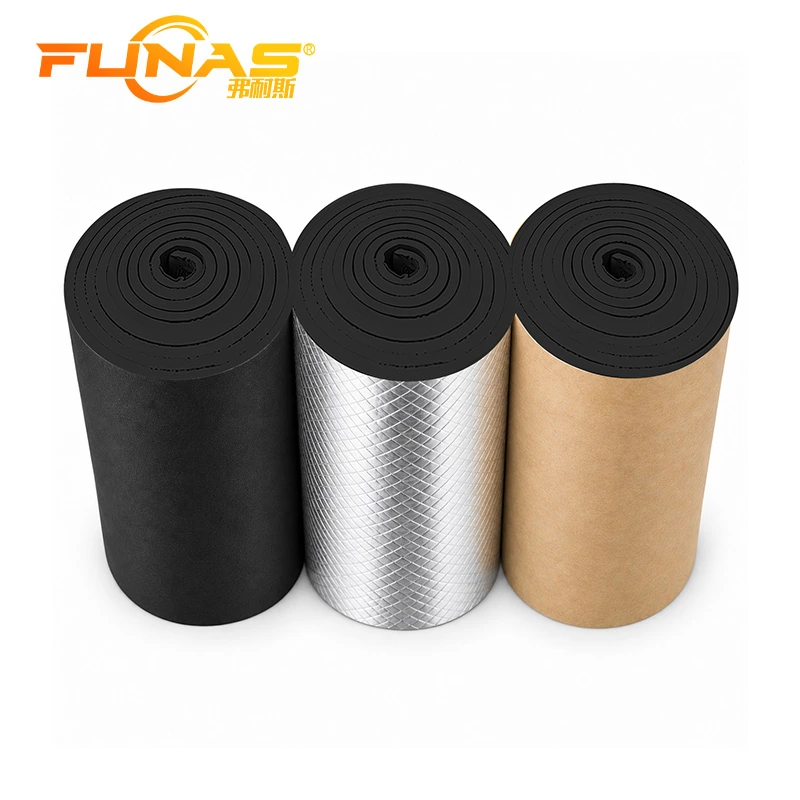
NBR/PVC Rubber Foam Sheet & Roll Insulation
FUNAS manufactures flexible closed-cell NBR/PVC elastomeric foam insulation in sheet and roll form for HVAC ducts, large-diameter piping, chilled-water systems, tanks, vessels and mechanical equipment. B1 and B2 grades are available in standard and custom sizes, with plain, self-adhesive and aluminum foil-faced options for distributors, contractors and project procurement.
Leave a message
Have any questions or concerns about our products? Please leave us a message here and our team will get back to you promptly.
Your queries, ideas, and collaboration opportunities are just a click away. Let’s start a conversation.


FUNAS Insulation Material
funasinsulation