


















































Ultimate 2026 Guide to Car Noise Insulation: Silence Your Ride
A comprehensive, authoritative guide to car noise insulation for 2026. This article covers the physics of sound, detailed material analysis (CLD, MLV, NBR foam, fiberglass), step-by-step DIY installation, and specific strategies for EVs and trucks. It empowers readers to achieve a luxury-level quiet ride through scientifically backed methods.
- Introduction: Why Your Car Deserves a Silent Sanctuary
- Decoding Car Noise: Sources and Types of Unwanted Sounds
- The Science Behind Silence: How Car Noise Insulation Works
- 1. Vibration Damping (Sound Deadening)
- 2. Sound Blocking (Mass Loading)
- 3. Sound Absorption
- Choosing Your Arsenal: A Comprehensive Guide to Car Soundproofing Materials
- Constrained Layer Dampers (CLD) / Butyl Mats
- Mass Loaded Vinyl (MLV)
- Closed-Cell Foam (CCF) vs. Open-Cell Foam
- Fibrous Absorbers: Fiberglass and Natural Wool
- Rubber Sheets
- Strategic Application Areas: Where to Insulate for Maximum Impact
- 1. Doors: The Acoustic Gateway
- 2. Floorboard & Transmission Tunnel
- 3. Wheel Wells
- DIY Car Noise Insulation: A Step-by-Step Installation Guide
- Step 1: Preparation and Safety
- Step 2: Apply the Vibration Damper (CLD)
- Step 3: The Decoupling Layer
- Step 4: The Noise Barrier (MLV)
- Advanced Techniques & Layering Strategies
- Vehicle-Specific Considerations: Tailoring Insulation for Your Ride
- Electric Vehicles (EVs)
- SUVs and Trucks
- Older Vehicles
- Budgeting Your Silence: Cost-Effective Car Noise Insulation
- Conclusion: Enjoy the Serenity of a Quieter Ride
- Frequently Asked Questions
- What is the best material for car noise insulation?
- Is car soundproofing worth it?
- How much does it cost to soundproof a car?
- Can I soundproof my car myself?
- Where should I start when soundproofing my car?
- How long does car sound insulation last?
- Does soundproofing a car add too much weight?
- What is the difference between sound deadening and sound absorption?
- References
Introduction: Why Your Car Deserves a Silent Sanctuary
In an increasingly noisy world, the cabin of your vehicle should be a refuge. Yet, for many drivers, the roar of the highway and the drone of the engine turn a daily commute into an exhausting ordeal. Car noise insulation is no longer just a luxury reserved for high-end limousines; it is a practical upgrade that transforms the driving experience. Beyond the immediate comfort of a quiet ride, effective soundproofing reduces driver fatigue, improves concentration, and allows your audio system to perform at its peak potential.
This ultimate guide will take you beyond the basics. We will dismantle the science of acoustics, evaluate professional-grade materials, and provide a masterclass in installation. Whether you are driving a vintage restoration or a modern electric vehicle, this roadmap will help you silence the noise for good.
Decoding Car Noise: Sources and Types of Unwanted Sounds
Before we can silence noise, we must understand its origins. Automotive noise is rarely singular; it is a complex symphony of unwanted frequencies attacking your cabin from every angle.
· Road Noise: This low-frequency rumble is generated by the interaction between your tires and the pavement. It transmits through the suspension and vibrates the vehicle's chassis.
· Engine & Exhaust Noise: Mechanical sounds and exhaust drone create airborne noise that penetrates the firewall and floor pan, often manifesting as a constant hum.
· Wind Noise: As speed increases, aerodynamic drag creates turbulence around pillars, mirrors, and weather stripping. This is typically high-frequency airborne noise.
· Structure-Borne Vibrations: This is the most insidious type. The metal panels of your car act like giant speakers, resonating with the energy from the road and engine to amplify sound.
The Science Behind Silence: How Car Noise Insulation Works
Effective noise reduction is a physics problem that requires a multi-layered solution. You cannot simply stuff "insulation" into a door and expect silence. You must address three distinct physical phenomena:
1. Vibration Damping (Sound Deadening)
The first line of defense is stopping the metal itself from singing. As described in acoustic engineering principles, damping dissipates vibrational energy by converting it into low-level heat. This is typically achieved using viscoelastic materials that constrain the metal panel.
2. Sound Blocking (Mass Loading)
To stop airborne noise (like traffic or sirens) from entering the cabin, you need mass. The "Mass Law" of acoustics dictates that adding weight to a barrier significantly reduces sound transmission. This is where heavy, dense materials come into play.
3. Sound Absorption
Once noise is inside the cabin, it bounces off hard surfaces (glass, plastic), creating echoes. Absorption uses porous materials to trap these sound waves, preventing them from reverberating.
Choosing Your Arsenal: A Comprehensive Guide to Car Soundproofing Materials
Selecting the right car sound insulation material is critical. Let’s analyze the top performers in the industry.
Constrained Layer Dampers (CLD) / Butyl Mats
The industry standard for vibration damping is the butyl mat. These sheets consist of a butyl rubber adhesive layer topped with a foil constraint layer. They are superior to old-school asphalt mats, which can melt and emit odors.
Mass Loaded Vinyl (MLV)
For blocking noise, MLV is the champion. It is a dense, flexible vinyl impregnated with heavy particles (like barium sulfate or calcium carbonate). It acts as a heavy curtain that sound waves simply cannot push through.
Closed-Cell Foam (CCF) vs. Open-Cell Foam
· Closed-Cell Foam (CCF): This material is composed of impermeable gas bubbles. It is excellent for decoupling (creating a cushion between vibrating parts) and is moisture-resistant. NBR foam (Nitrile Butadiene Rubber) is a premium choice here, offering excellent thermal properties and oil resistance.
· Open-Cell Foam: These foams have interconnected pores that trap air, making them superior for absorption. However, they can absorb water, so they are best used in dry, interior cavities.
Fibrous Absorbers: Fiberglass and Natural Wool
For maximizing absorption in headliners or under hoods, fibrous materials are king. Fiberglass wool is highly effective at trapping frequencies, but it requires careful handling. To understand more about this category, you can read about the properties, uses, and benefits of glass wool insulation. Note that in automotive applications, fiberglass must be sealed or faced to prevent fibers from becoming airborne irritants.
Rubber Sheets
A versatile addition to any soundproofing kit is a high-density rubber sheet. Often used as a base layer or a decoupling agent, these sheets provide a robust barrier against road debris noise in wheel wells. If you are sourcing materials, knowing How to Choose Rubber Sheets is essential to ensure you get the right density and temperature resistance.
Strategic Application Areas: Where to Insulate for Maximum Impact
To achieve the best results, you must target the specific noise sources for your vehicle type.
1. Doors: The Acoustic Gateway
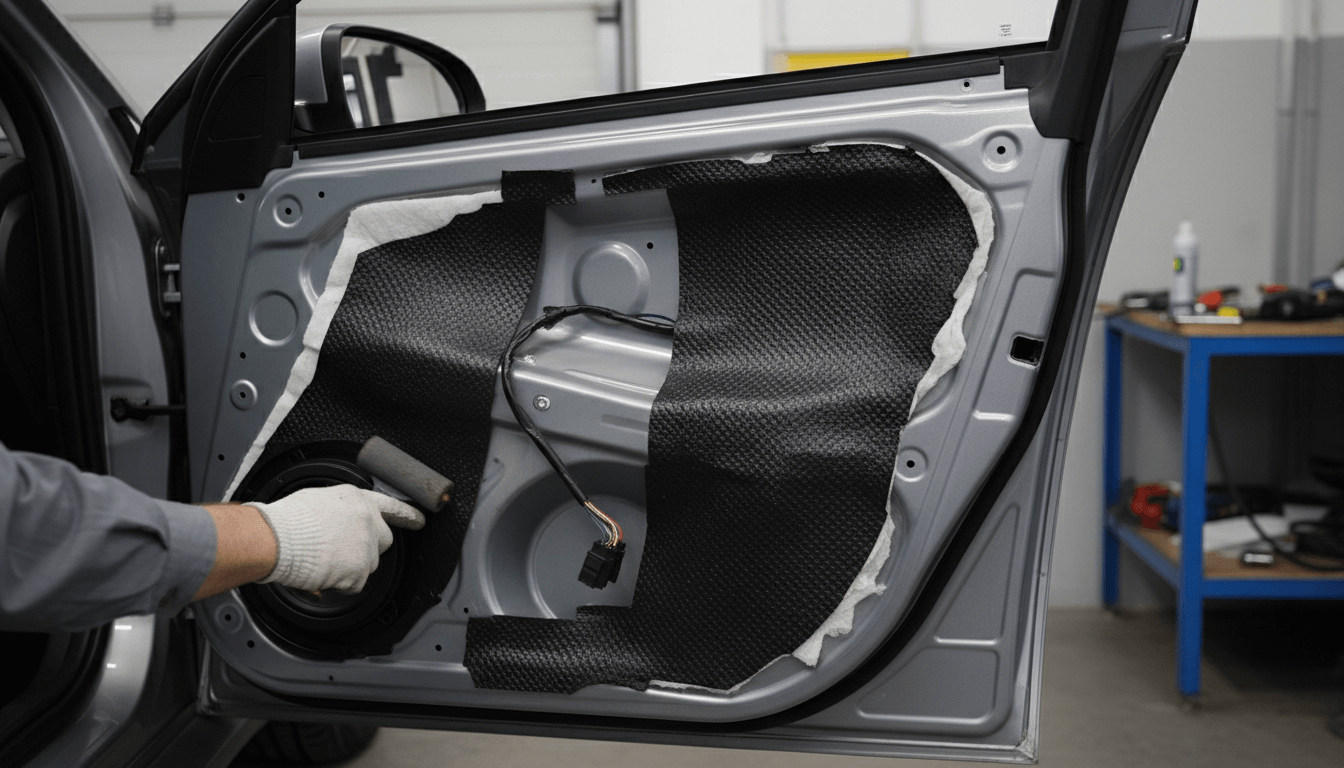
Doors are thin metal sheets that vibrate easily. Treating them improves cabin silence and dramatically enhances speaker performance (mid-bass response).
· Strategy: Apply CLD to the outer metal skin (inside the door) to stop resonance. Use a car sound insulation mat (like CCF) to decouple the plastic trim from the inner metal skin.
2. Floorboard & Transmission Tunnel
This is the primary entry point for road noise and heat. Car heat insulation is just as important here as soundproofing.
· Strategy: Full coverage with CLD, followed by a layer of MLV. The MLV acts as a floating barrier to block the low rumble of tires.
3. Wheel Wells
Your tires kick up water, rocks, and debris, creating high-impact noise.
· Strategy: This area requires heavy-duty sound deadening insulation for cars. Applying a liquid spray-on deadener or heavy rubberized undercoating externally can dampen the impact noise before it hits the metal.
DIY Car Noise Insulation: A Step-by-Step Installation Guide
Installing sound deadening insulation car kits is a manageable DIY project if you follow the correct process.
Step 1: Preparation and Safety
Safety First: When working with foil-backed mats or fiberglass wool, always wear gloves and long sleeves. Use a respirator if applying spray adhesives.
Clean: Remove seats, carpets, and trim. Thoroughly degrease the metal surfaces with isopropyl alcohol. Adhesives will fail on dirty or oily surfaces.
Step 2: Apply the Vibration Damper (CLD)
Cut your butyl mats to size. You do not need 100% coverage; 25-50% coverage on flat metal panels is often sufficient to stop resonance. Use a hand roller to press the mat firmly onto the metal, eliminating air bubbles. The "dead" sound when you knock on the panel indicates success.
Step 3: The Decoupling Layer
Apply a layer of Closed-Cell Foam (like NBR foam) over the CLD and the rest of the floor. This layer acts as a gasket and thermal insulator. It prevents the heavy MLV layer from rattling against the metal.
Step 4: The Noise Barrier (MLV)
Install Mass Loaded Vinyl over the foam. This layer must be 100% airtight to be effective. Overlap seams and seal them with vinyl cement or specific acoustic tape. Think of this as building a waterproof bathtub—if water can get through, so can sound.
Advanced Techniques & Layering Strategies
For the ultimate car insulation experience, the "Sound Sandwich" is the industry gold standard:
1. Metal Skin
2. CLD Layer (Vibration Damping)
3. CCF Layer (Decoupler/Thermal)
4. MLV Layer (Noise Barrier)
5. Carpet/Trim
This combination addresses all three physics principles: damping, decoupling, and blocking. It is the only way to achieve luxury-level silence.
Vehicle-Specific Considerations: Tailoring Insulation for Your Ride
Electric Vehicles (EVs)
EVs present a unique paradox: the lack of an engine makes wind and tire noise seemingly louder. Without the "masking effect" of combustion, high-frequency motor whine becomes annoying.
· Focus: Prioritize wheel wells and door seals to block tire hiss. Use high-quality car sound insulation material with excellent high-frequency absorption properties in the pillars.
SUVs and Trucks
Large cabins act as echo chambers.
· Focus: The roof is a major source of wind noise and heat. Insulating the headliner with a fibrous absorber or specialized acoustic foam can drastically reduce the "cave" effect.
Older Vehicles
Restorations often deal with rattles.
· Focus: extensive vibration damping is needed. Check all weather stripping; no amount of internal insulation fixes a leaking window seal.
Budgeting Your Silence: Cost-Effective Car Noise Insulation
A full professional job can cost upwards of $2,000. However, a strategic DIY approach can yield 80% of the results for a fraction of the price.
· Entry Level ($100-$200): Treat the doors with CLD mats. This offers the best "bang for your buck" in audio improvement and rattle reduction.
· Mid-Range ($400-$600): Add floor coverage with CLD and a basic barrier layer.
· High-End ($800+): Full "Sound Sandwich" treatment including roof, trunk, and firewall, utilizing premium MLV and NBR foam.
Conclusion: Enjoy the Serenity of a Quieter Ride
Investing in car noise insulation transforms your vehicle. It is not just about silence; it is about upgrading the quality of your time spent on the road. By understanding the science and applying the right materials—from heavy rubber sheets to advanced foams—you can craft a driving experience that rivals the world’s finest luxury cars. Start small, be consistent with your installation, and enjoy the peace.
Frequently Asked Questions
What is the best material for car noise insulation?
The "best" material is actually a system. For vibration, butyl-based Constrained Layer Dampers (CLD) are superior. For blocking noise, Mass Loaded Vinyl (MLV) is the industry standard. For thermal and decoupling needs, NBR foam is an excellent choice.
Is car soundproofing worth it?
Absolutely. It reduces driver fatigue, improves the clarity of hands-free calls and music, and increases the perceived quality of the vehicle. For EV owners, it is essential to mitigate road noise that the engine no longer masks.
How much does it cost to soundproof a car?
DIY kits for doors start around $100. A complete high-quality DIY material package for a sedan ranges from $500 to $900. Professional installation is labor-intensive and can range from $1,500 to over $4,000.
Can I soundproof my car myself?
Yes, it is a very common DIY project. It requires patience and basic tools (trim removal tool, roller, scissors/knife). The key is preparation—cleaning surfaces thoroughly—and ensuring airtight seals on barrier layers.
Where should I start when soundproofing my car?
Start with the doors. They are the closest noise source to your ears and usually have the least factory insulation. Treating doors provides immediate improvements in road noise reduction and audio quality.
How long does car sound insulation last?
Quality butyl mats and closed-cell foams like NBR are designed to last the life of the vehicle. They do not degrade or absorb moisture like older asphalt or open-cell cotton materials might.
Does soundproofing a car add too much weight?
A full treatment can add 50-100 lbs. While this sounds like a lot, it is equivalent to carrying a small passenger. For daily driving, the fuel economy impact is negligible compared to the comfort gained.
What is the difference between sound deadening and sound absorption?
Sound deadening (damping) stops the metal panels from vibrating. Sound absorption traps airborne sound waves inside porous materials (like foam or wool) to stop them from bouncing around the cabin.
References
· Wikipedia: Constrained-layer damping
· ScienceDirect: Acoustic absorption of open-cell foam
· Acoustic Challenges in Electric Vehicles: A Comparative Study of HVAC Noise in EVs and ICE Vehicles

Does sound insulation foam Actually Work in 2026? Ultimate guide About Blocking vs. Absorbing Noise
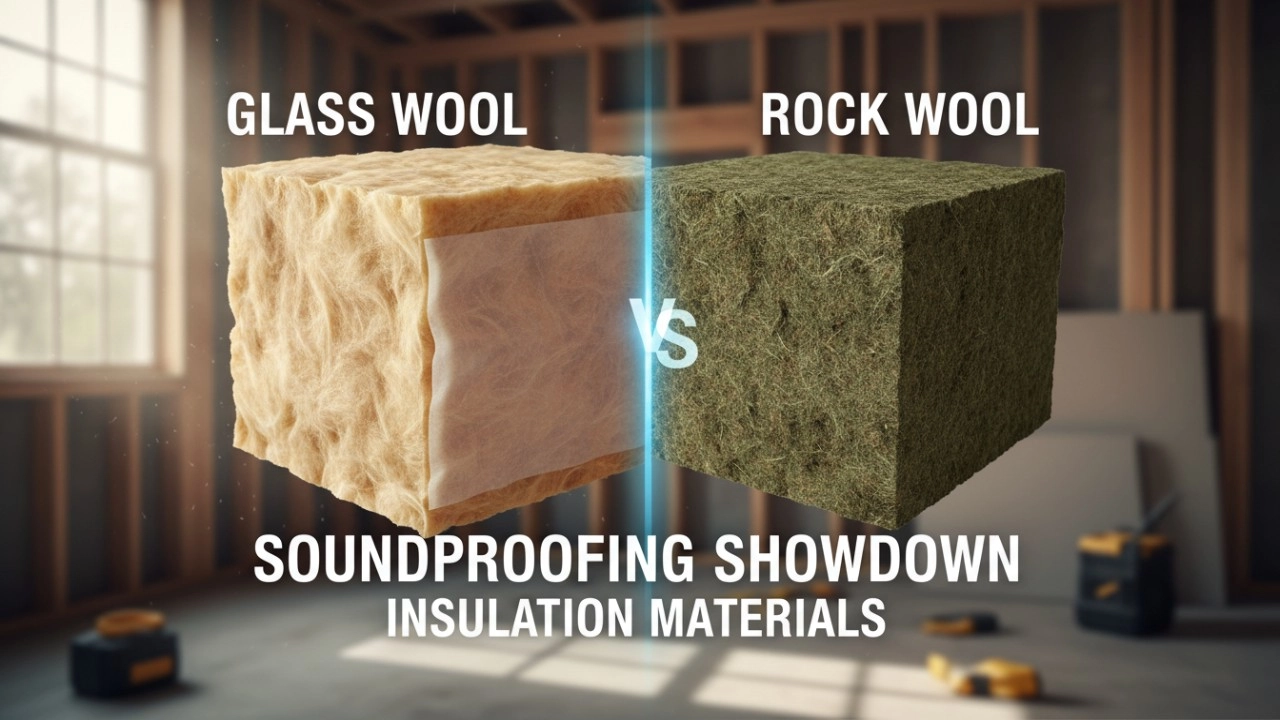
Fiberglass vs. Rockwool: Which Soundproofing Insulation Material Wins for Acoustic Control?
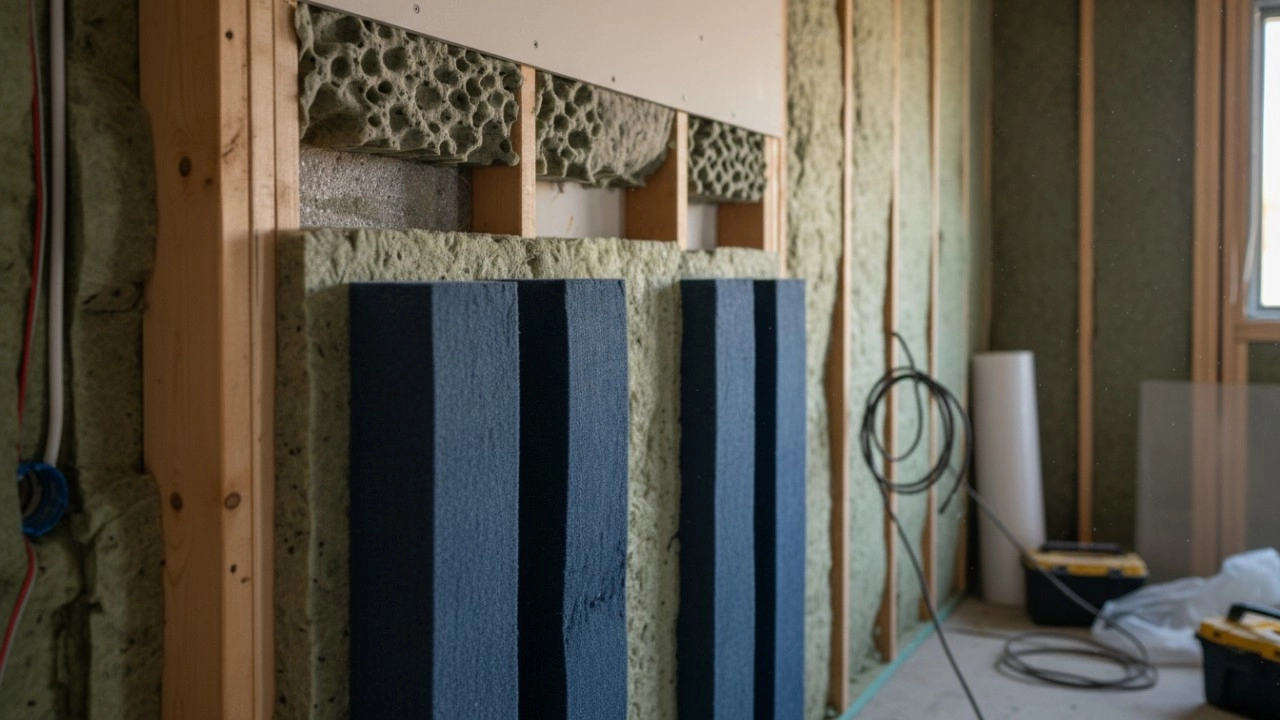
Sound Insulation Foam vs. Acoustic Panels: Which One Actually Stops Noise? (2026 Guide)
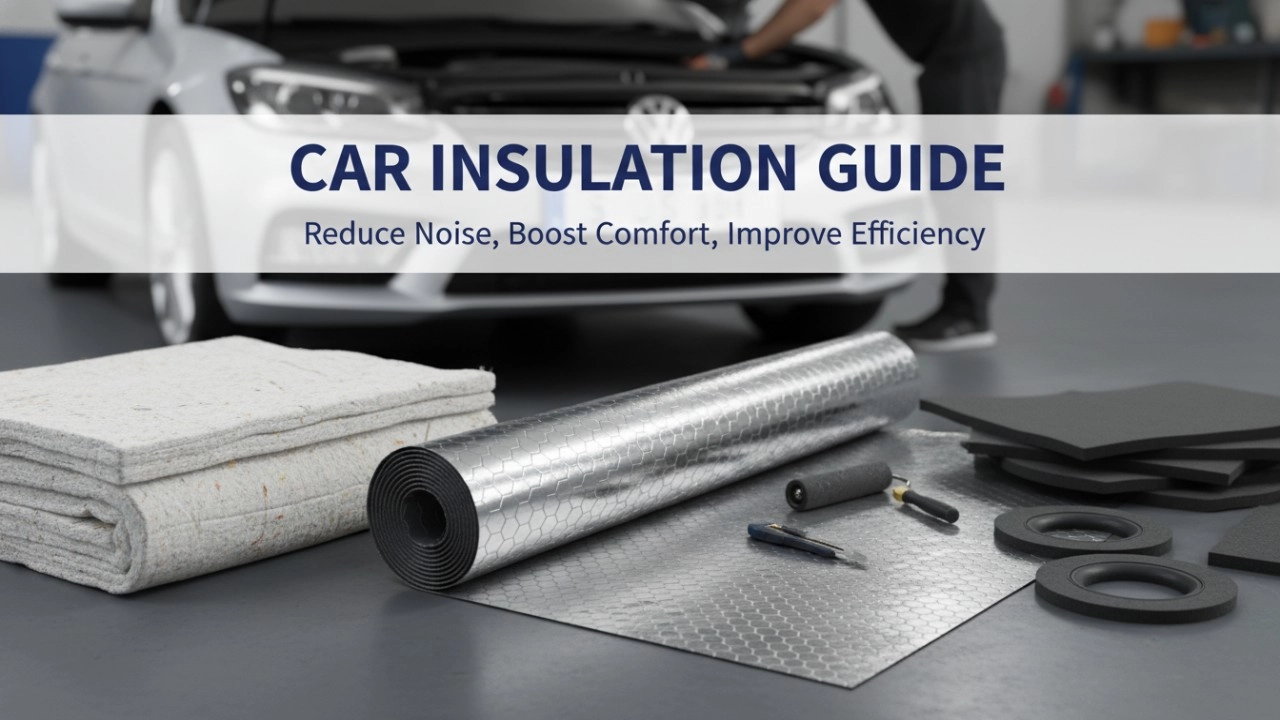
7 Dangerous Mistakes to Avoid When Selecting insulating materials for Your Car (2026 Guide)
service
How does your technical support work?
Our technical support team is available to guide you through every stage of your project—from product selection and design to installation. We provide expert consultation to ensure that you get the best insulation solution for your needs and can assist with troubleshooting if needed.
Are your rubber foam products environmentally friendly?
Yes, our insulation products are designed with sustainability in mind. They help reduce energy consumption by minimizing heat loss and gain, and they are made from durable materials that have a long life cycle, reducing the need for frequent replacement.
FAQ
What types of rubber foam insulation do you offer?
We offer a wide range of rubber foam insulation with different thicknesses and specifications. Thermal insulation material manufacturer FUNAS sleeves and sheets are suitable for different application scenarios.
What is the typical delivery time for custom orders?
Our daily production capacity is 800 cubic meters. Delivery time varies depending on the complexity of the insulation material wholesale order, but we can deliver large quantities of customized products within 4-6 weeks after the approval date, and small quantities can be delivered within 15 days.
You might also like
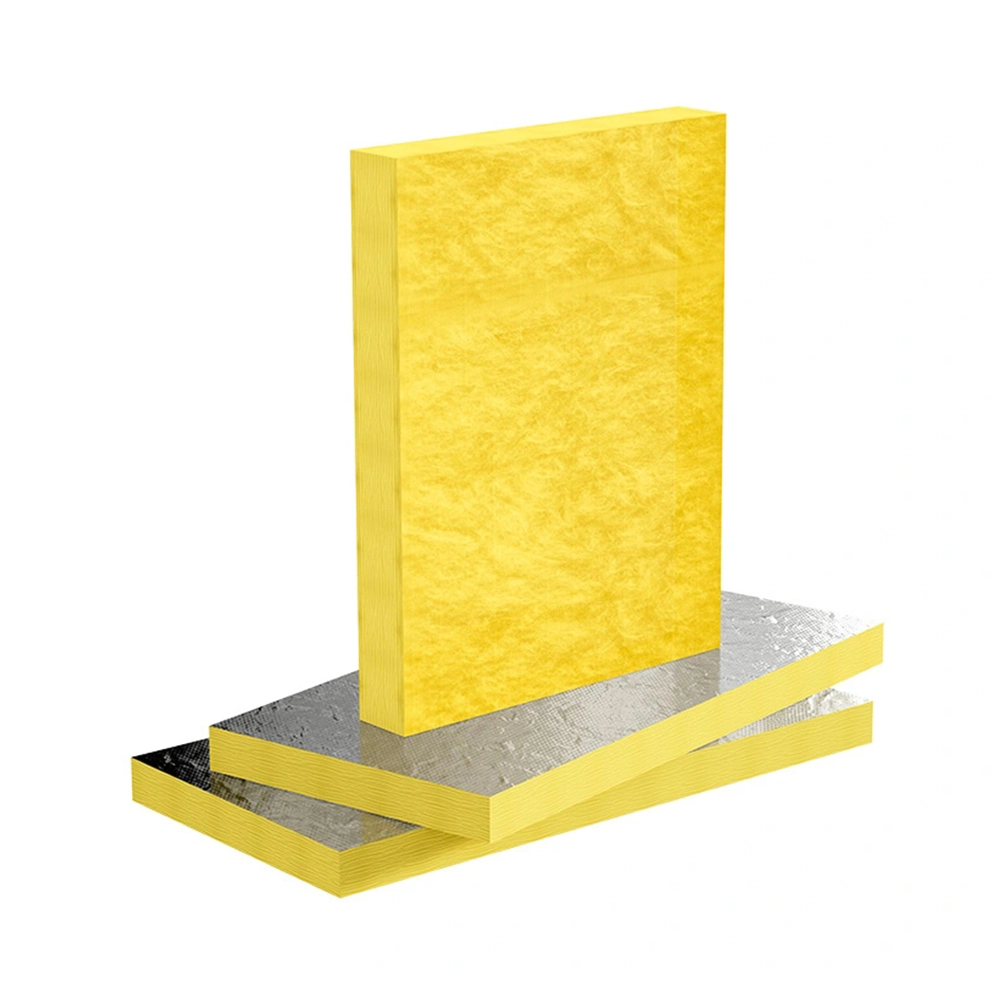
Wholesale Glass Wool Board Panel Sheet with or without aluminum foil
Premium glass wool board with excellent thermal insulation and sound absorption. Suitable for different construction needs.

Wholesale Rock Wool Mineral Wool Board Panel Sheet
High-performance rock wool board for superior thermal and acoustic insulation. A reliable choice for building projects.
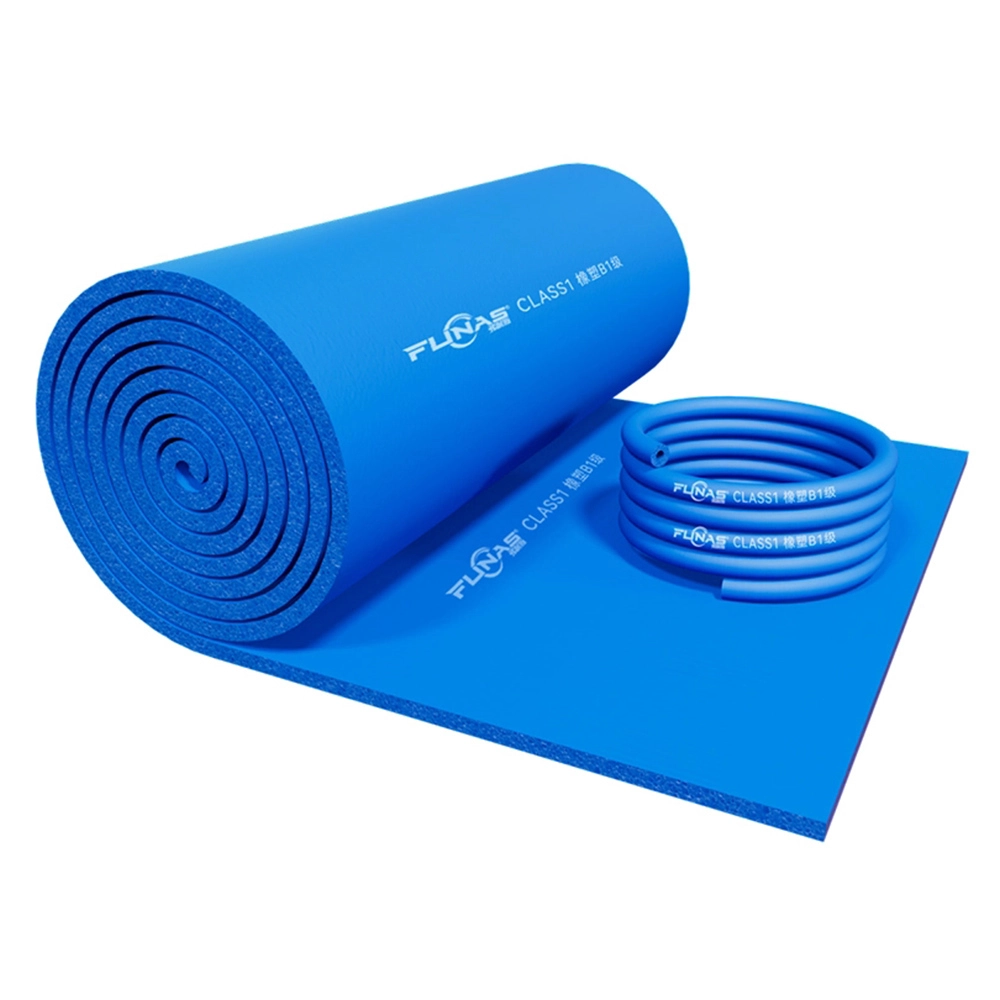
Wholesale blue Rubber-plastic Board Rubber foam panel sheet
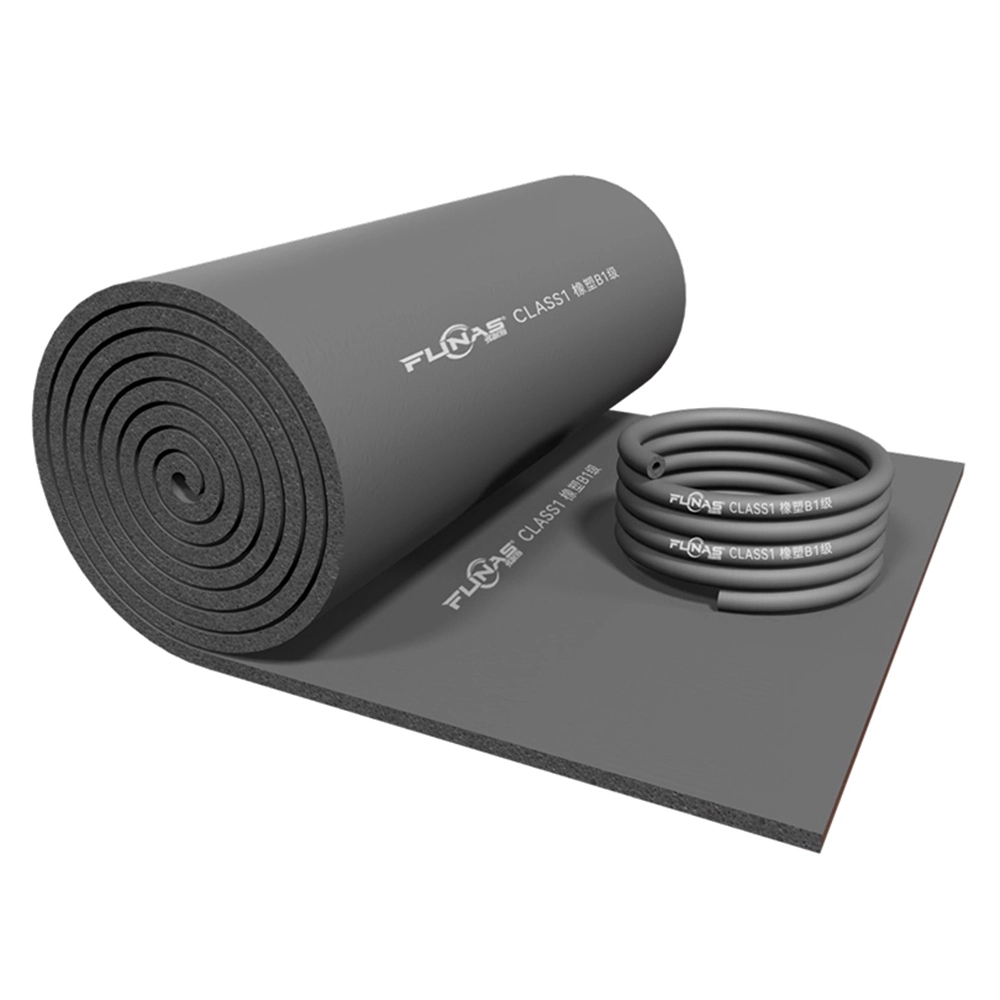
Wholesale black Rubber-plastic Board Rubber foam panel sheet
Leave a message
Have any questions or concerns about our products? Please leave us a message here and our team will get back to you promptly.
Your queries, ideas, and collaboration opportunities are just a click away. Let’s start a conversation.
